


Equitymaster's 2026 Grand Festive Offer
Two Research Reports, Six Stocks
3 Small Cap, 3 Large Cap
**Important: We hate spam as much as you do. Check out our Privacy Policy and Terms Of Use.
3 Undervalued Critical Mineral Stocks to Watch as Union Budget 2026 Nears
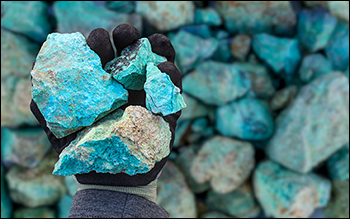 Image source: BJP7images/www.istockphoto.com
Critical minerals have emerged as a key policy priority for the central government in recent years, given their strategic importance across clean energy, electronics, and defence.
The Union Budget 2025-26 underscored this focus by announcing reforms in the mining sector, including minor minerals, and outlining a policy framework to recover critical minerals from mine tailings.
With India currently lagging in both extraction and processing capabilities, the government has moved to ease availability by cutting customs duty to zero on 12 critical minerals, along with cobalt powder and waste and scrap of lithium, lead, and zinc.
Further strengthening the push, the Union Cabinet in January 2025 approved the National Critical Mineral Mission (NCMM), allocating Rs 163 bn to build a robust framework aimed at achieving self-reliance in the critical mineral ecosystem.
As the Union Budget 2026 approaches, expectations remain high for sustained policy support and higher investments in this space.
Against this backdrop, here are three undervalued critical mineral stocks to watch.
#1 NALCO
First on the list is NALCO.
NALCO currently trades at a PE ratio of 9.9, which is lower than the industry average PE of 23.4.
At present, Nalco is engaged in exploring and mining critical minerals overseas through Khanij Bidesh India Ltd (Kabil), a joint venture of CPSEs in which Nalco has a 40% stake and Hindustan Copper Ltd, and Mineral Exploration Corporation Ltd, 30% each.
Kabil's mandate is to identify, acquire, and develop critical and strategic minerals such as lithium, cobalt, and others from overseas sources to secure India's long-term needs.
It has already obtained exploration rights for lithium blocks in Argentina and signed agreements with Australia to evaluate projects.
Further, it plans to diversify operations by entering the critical minerals space, according to Brijendra Pratap Singh, Chairman and Managing Director, as cited by Moneycontrol. At present, Nalco does not have exclusive exposure to critical minerals.
However, going forward, the company intends to expand into this segment by seeking exploration rights within India and participating in government auctions for critical mineral blocks as they are rolled out.
On the financial front, its revenue has grown at a CAGR of 5.7%, while profit has seen growth of 21.3% in the past three years.
Its three-year average ROE and ROCE stand at 18.1% and 24.4% respectively. The company continues to operate with a debt-free balance sheet.
NALCO Financial Snapshot (FY23-25)
| Year | 2023 | 2024 | 2025 |
|---|---|---|---|
| Revenue (Rs in m) | 142,569.0 | 131,492.0 | 167,876.0 |
| Revenue Growth (%) | 0.3 | -7.8 | 27.7 |
| Net Profit (Rs in m) | 14,347.0 | 19,885.0 | 52,679.0 |
| Net profit margin (%) | 10.1 | 15.1 | 31.4 |
| Return on equity (%) | 10.9 | 13.8 | 29.6 |
| Return on capital employed (%) | 14.2 | 19.0 | 40.1 |
| Debt to Equity Ratio (x) | 0.0 | 0.0 | 0.0 |
For more details, see the NALCO company fact sheet and quarterly results.
#2 Coal India
Next on the list is Coal India.
Coal India as of 2 January 2026 trades at a PE ratio of 8.5, which is lower than the industry average PE of 14.9.
Coal India is steadily expanding beyond coal, with a growing focus on critical minerals.
In January 2025, CIL signed a non-binding MoU with IREL (India) Ltd to collaborate on the development of critical minerals, including mineral sands and rare earth elements.
This was followed in July 2025 by an MoU with Hindustan Copper to jointly explore opportunities in the critical minerals space.
In September 2025, Coal India was declared the preferred bidder by the Ministry of Mines for the Ontillu-Chandragiri Rare Earth Element (REE) exploration block.
The block spans 209.62 sq. km. and will be explored under an official licence in line with the Mines and Minerals (Development and Regulation) Act, 1957.
On the financial front, its revenue has grown at a CAGR of 11.2%, while profit has seen growth of 26.7% in past three years.
Its three-year average ROE and ROCE stand at 44.3% and 56.3% respectively.
Coal India Financial Snapshot (FY23-25)
| Year | 2023 | 2024 | 2025 |
|---|---|---|---|
| Revenue (Rs in m) | 783,668.0 | 807,672.0 | 791,904.0 |
| Revenue Growth (%) | 36.0 | 3.1 | -2.0 |
| Net Profit (Rs in m) | 317,230.0 | 373,691.0 | 353,021.0 |
| Net profit margin (%) | 40.5 | 46.3 | 44.6 |
| Return on equity (%) | 52.1 | 45.2 | 35.6 |
| Return on capital employed (%) | 67.7 | 56.2 | 44.9 |
| Debt to Equity Ratio (x) | 0.1 | 0.1 | 0.1 |
Going forward, Coal India (CIL) is actively pursuing a diversification strategy to reduce its dependence on coal and transition towards a more sustainable energy future.
This involves diversifying into renewable energy by establishing coal-based thermal and pump storage projects, solar & wind energy generation projects, and critical minerals.
For more details, see the COAL INDIA company fact sheet and quarterly results.
#3 Vedanta
Last on the list is Vedanta.
Vedanta, as of 2 January 2026, trades at a PE ratio of 18.9, which is lower than the industry average PE of 53.1.
Vedanta Ltd is increasingly positioning itself as a key player in India's critical minerals landscape, aligning its strategy with the country's energy transition and self-reliance goals.
Under its Vedanta 2.0 transformation plan, the company is reshaping a large part of its portfolio towards energy transition metals, reinforcing its focus on minerals that are vital for clean energy, electric mobility and strategic industries.
The company is participating in the Government of India's exploration auctions for domestic reserves of critical minerals such as cobalt, nickel, vanadium, graphite, rare earth elements, and potash.
Despite India's strong geological potential, less than 20% of identified critical mineral reserves have been explored so far, creating a significant long-term opportunity.
In this context, Vedanta has emerged as one of the most aggressive bidders in the space, securing 10 out of the 34 critical mineral blocks allocated so far by the government.
Most recently, on 26 December 2025, Vedanta was declared the successful bidder for the Depo Graphite-Vanadium block under Tranche IV of the Ministry of Mines' critical mineral auctions.
With its deep expertise in mining and metallurgy, it has a growing portfolio of critical mineral assets.
On the financial front, its revenue has grown at a CAGR of 4.8%, while profit has seen growth from Rs 145,060 m in FY23 to Rs 205,350 in FY25 in past three years.
Its three-year average ROE and ROCE stand at 20.7% and 27.6% respectively.
Vedanta Financial Snapshot (FY23-25)
| Year | 2023 | 2024 | 2025 |
|---|---|---|---|
| Revenue (Rs in m) | 1,473,080.0 | 1,437,270.0 | 1,529,680.0 |
| Revenue Growth (%) | 11.0 | -2.4 | 6.4 |
| Net Profit (Rs in m) | 145,060.0 | 75,390.0 | 205,350.0 |
| Net profit margin (%) | 9.8 | 5.2 | 13.4 |
| Return on equity (%) | 37.0 | 24.7 | 50.1 |
| Return on capital employed (%) | 32.0 | 36.8 | 39.3 |
| Debt to Equity Ratio (x) | 1.1 | 1.7 | 1.3 |
Going forward, company plans to increase its focus on critical minerals.
For more details, see the VEDANTA company fact sheet and quarterly results.
Conclusion
As a part of its climate action strategy, India has committed to achieving net-zero emissions by 2070. The government is targeting the creation of 500 GW of non-fossil fuel energy capacity by 2030.
This large-scale clean energy transition is heavily dependent on the availability of key minerals such as copper, cobalt, graphite, lithium, nickel, neodymium and silicon, collectively referred to as energy transition critical minerals.
Apart from green technologies, critical minerals also play an important role in national defence, information technology, aviation, and space research.
With strong policy backing, rising domestic demand and increased focus on self-reliance, companies operating in the critical minerals space are set to bolster.
However, these stocks are not without risks. Execution challenges in mining and processing, long gestation periods for projects and dependence on regulatory approvals can weigh on the companies.
Investors should evaluate the company's fundamentals, corporate governance, and valuations of the stock as key factors when conducting due diligence before making investment decisions.
Happy investing.
--- Advertisement ---
Investment in securities market are subject to market risks. Read all the related documents carefully before investing
Which businesses are most likely to emerge stronger over the next 3 to 5 years?
After screening thousands of listed companies, comparing industries, and examining balance sheets...
Our research team discovered some of the strongest opportunities in what we call... Essential Stocks.
Opportunities like this do not remain hidden forever.
Disclaimer: This article is for information purposes only. It is not a stock recommendation and should not be treated as such. Learn more about our recommendation services here...
ABOUT EQUITYMASTER
Since 1996, Equitymaster has been the source for honest and credible opinions on investing in India. With solid research and in-depth analysis Equitymaster is dedicated towards making its readers- smarter, more confident and richer every day. Here's why hundreds of thousands of readers spread across more than 70 countries Trust Equitymaster.
PREMIUM PRODUCTS
- Hidden Treasure
- Forever Stocks
- Big Wave Profits
- Equitymaster Venture
- Microcap Millionaires
- Momentum Profits
- Double Income
- Midcap Value Alert
- Exponential Profits
- Annual Breakout Alert
- Lazy Millionaire
- Phase One Alert
- Smallcap AlphaQuest
- InsiderPro Stocks
- StockSelect
- Private Briefing
- Active Wealth Multiplier 2030
- FundSelect
- Fund Advantage
QUICK LINKS
POPULAR TOPICS
- Multibagger Penny Stocks
- Basics of Value Investing
- Benjamin Graham
- How to Invest in Gold
- How to Invest in Silver
- Best Stocks to Buy Today
- Best Small-cap Stocks to Buy
- Best Bluechip Stocks to Buy
- Guide to Penny Stocks
- How to Invest in the Share Market
- Warren Buffett - The Value Investor
- Pick the Best Multibagger Stocks
TRENDING TOPICS
- Best Defence Stocks in India
- Upcoming Dividend Stocks
- Best Semiconductor Stocks in India
- Data Center Stocks in India
- Best Railway Stocks in India
- Best Solar Stocks in India
- Fastest Growing Stocks in India
- List of BSE Sensex 30 Stocks
- Adani Group Shares
- Stocks Recently Bought by FIIs in India
- Top Value Stocks in India


LEGAL DISCLAIMER:
Investment in securities market are subject to market risks. Read all the related documents carefully before investing.
Registration granted by SEBI, enlistment with BSE as IA and RA, and certification from NISM in no way guarantee performance of the intermediary or provide any assurance of returns to investors.
All rights reserved. Any act of copying, reproducing or distributing any content from this website whether wholly or in part, for any purpose without the permission of Quantum Information Services Private Limited is strictly prohibited and shall be deemed to be copyright infringement.
Quantum Information Services Private Limited (QIS) is a SEBI registered Research Analyst (bearing registration no INH000021128) and Investment Adviser(Reg. No: INA000000680). Consequent upon the merger of Equitymaster Research Private Limited into QIS, effective October 30, 2025 QIS owns and operates brand 'Equitymaster' and website www.equitymaster.com. This does not constitute or is not intended to constitute an offer to buy or sell, or a solicitation to an offer to buy or sell financial products, units or securities and QIS including its employees, personnel, directors, associates will not be liable for any losses (direct or indirect) incurred or investment(s) made or decisions taken/or not taken based on the information provided herein. All content and information is provided on an 'As Is' basis by QIS. Information herein is believed to be reliable but QIS does not warrant its completeness or accuracy and expressly disclaims all warranties and conditions of any kind, whether express or implied. The services rendered by QIS are on a best effort basis. QIS does not assure or guarantee the user any minimum or fixed returns. The securities quoted, if any are for illustration only and are not recommendatory. Use of this information is at the user's own risk. The user must make his own investment decisions based on his specific investment objective and financial position and using such independent advisors as he believes necessary. This is not directed for access or use by anyone in a country, especially, USA, Canada or the European Union countries, where such use or access is unlawful or which may subject QIS or its affiliates to any registration or licensing requirement.
The performance data quoted represents past performance and does not guarantee future results. As a condition to accessing QIS's content and website, you agree to our Terms and Conditions of Use, available here
Equitymaster requests your view! Post a comment on "3 Undervalued Critical Mineral Stocks to Watch as Union Budget 2026 Nears". Click here!
Comments are moderated by Equitymaster, in accordance with the Terms of Use, and may not appear
on this article until they have been reviewed and deemed appropriate for posting.
In the meantime, you may want to share this article with your friends!