

Investment in securities market are subject to market risks. Read all the related documents carefully before investing
Equitymaster's 2026 Grand Festive Offer:
Get Rs 20,000 Worth of Research
For Rs 2,950 + GST.
**Important: We hate spam as much as you do. Check out our Privacy Policy and Terms Of Use.
5 Stocks to Watch as India Pushes for Domestic EV Battery Manufacturing in Budget 2025
 Image source: Just_Super/www.istockphoto.com
EVs have been hyped due to their growing popularity. But something thing that is not hyped enough EV batteries.
Now that is about to change as EV batteries have come into the spotlight in India.
As India accelerates its transition to clean mobility, the government has recognized the need to support domestic EV battery manufacturing.
The recent Union Budget 2025, presented by Finance Minister Nirmala Sitharaman, reinforces this vision with significant incentives for the sector.
A major highlight of the budget was the exemption of customs duties on lithium-ion batteries and other critical materials, aimed at reducing battery costs.
To further boost local production, the government has expanded the list of capital goods eligible for customs tax exemptions, adding 35 items for EV battery manufacturing.
Additionally, the budget focuses on reducing India's dependence on battery imports by promoting lithium-ion battery recycling.
Let's look at the companies that will benefit.
#1 Exide Industries
First on the list is Exide Industries.
Exide Industries, a dominant name in India's battery manufacturing sector for over 70 years, has been making strategic investments to strengthen its position in the EV battery space.
Recognizing the growing demand for lithium-ion technology, the company began setting up a 12 GWh lithium-ion cell manufacturing plant in 2022, structured in two phases of 6 GWh each.
The first phase is expected to be operational by the end of FY25, positioning Exide as one of the leading domestic lithium-ion cell manufacturers.
The company's ongoing investments in lithium-ion technology align well with this policy shift, reducing reliance on imports while boosting domestic production capabilities.
In November 2024, Exide Industries further reinforced its EV ambitions by investing Rs 1,000 million (m) in its wholly owned subsidiary, Exide Energy Private Limited.
This capital infusion aims to accelerate the company's advancements in lithium-ion battery technology, including design, development, and large-scale manufacturing.
With a strong foothold in the Indian market, Exide has already secured partnerships with leading automakers like Tata Motors and Mahindra & Mahindra, ensuring a steady demand pipeline.
Looking ahead, Exide Industries plans to expand its global footprint, particularly in developed markets like America and Europe.
The company's proactive approach to scaling up production, coupled with favourable policy support, positions it as a key beneficiary of India's push toward EV battery self-sufficiency.
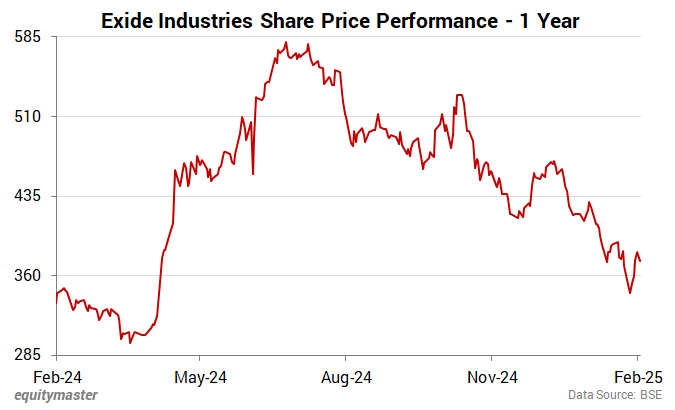
For more details, see the Exide Industries company fact sheet and quarterly results.
#2 Amara Raja Energy & Mobility
Next on the list is Amara Raja Energy & Mobility.
Amara Raja Energy & Mobility (ARE&M), the flagship company of the Amara Raja Group, is a dominant player in India's storage battery industry.
As one of the largest manufacturers of lead-acid batteries for both industrial and automotive applications, the company has also expanded its focus on lithium-ion technology to align with the evolving EV ecosystem.
In July 2024, Amara Raja signed a strategic agreement with Gotion InoBat Batteries (GIB), a subsidiary of China's Gotion High-Tech.
This partnership grants the company access to Gotion's advanced LFP (Lithium Iron Phosphate) battery technology, including the less common cylindrical form factor, further strengthening its technological capabilities.
To capitalize on the growing demand, Amara Raja is setting up a Giga Corridor in Divitipally, Telangana, with a planned capital expenditure of Rs 95 billion (bn).
This facility aims to develop a 16 GWh lithium-ion battery manufacturing capacity over the next decade, making it a key player in India's EV battery ecosystem.
Additionally, the company is investing in E Positive Energy Labs in Hyderabad, focusing on next-generation energy solutions, and expanding its EV product portfolio to include charging infrastructure alongside lithium-ion cells and packs.
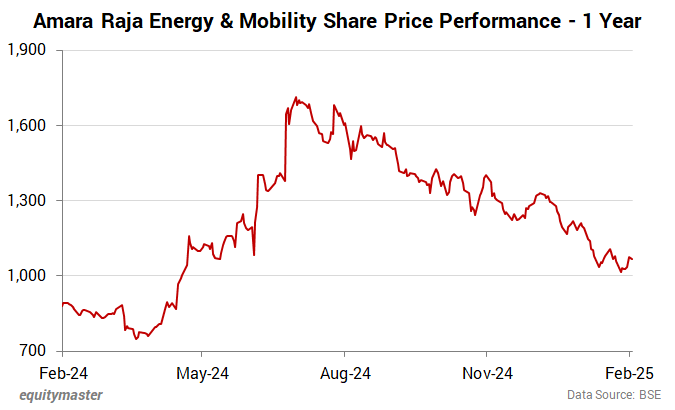
For more details, see the Amara Raja Energy & Mobility company fact sheet and quarterly results.
#3 HBL Power Systems
Next on the list is HBL Power Systems.
HBL Power Systems Limited (HBL) now know as HBL Engineering is a leading Indian manufacturer specializing in battery and power systems for electric vehicles (EVs).
The company has also ventured into powertrain solutions, offering integrated systems that include batteries, motor controllers, and drive motors.
The company has committed a capital expenditure of Rs 1.8 bn for FY25, out of which Rs 600 m has been allocated for setting up a lithium-ion production facility.
This strategic investment will enhance HBL's capabilities in EV battery production, positioning it to capitalize on the increasing demand driven by policy support and industry growth.
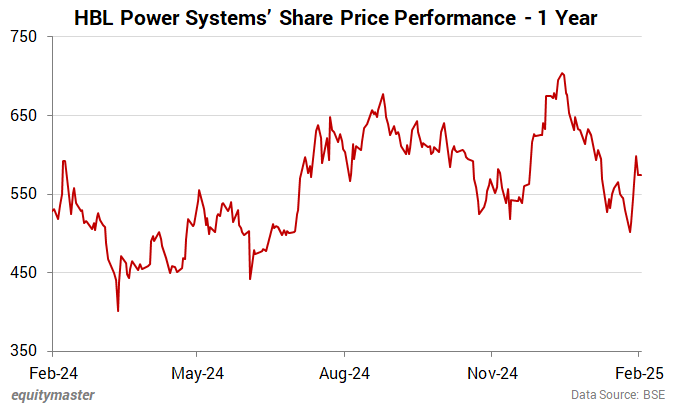
For more details, see the HBL Power company fact sheet and quarterly results.
#4 Ola Electric
Next on the list is Ola Electric.
Ola Electric has been making significant strides in lithium-ion battery technology, developing its own battery cells under the "Bharat" brand at its Gigafactory.
These advanced cells are designed to enhance energy efficiency, with five times more energy capacity than the commonly used 2,170 form-factor cells in automobiles.
Additionally, it offers a wider operating temperature range of 10-70°C and can charge up to 50% in just 13 minutes, making them a strong contender in the evolving EV battery landscape.
The budget's focus on reducing reliance on imports through customs duty exemptions and other supportive measures aligns with Ola's strategy of developing advanced lithium-ion cells in India.
This push not only strengthens the country's EV battery supply chain but also enhances Ola Electric's competitiveness in the market.
Looking ahead, Ola Electric plans to expand its presence in export markets over the medium to long term.
The company is also focused on further improving its cell technology to enhance vehicle range, reduce weight, shorten charging time, and optimize costs.
capitalize on the increasing demand driven by policy support and industry growth.
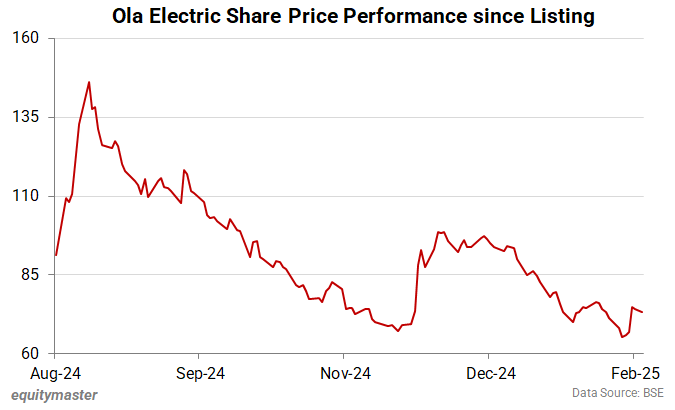
For more details, see the Ola Electric Mobility company fact sheet and quarterly results.
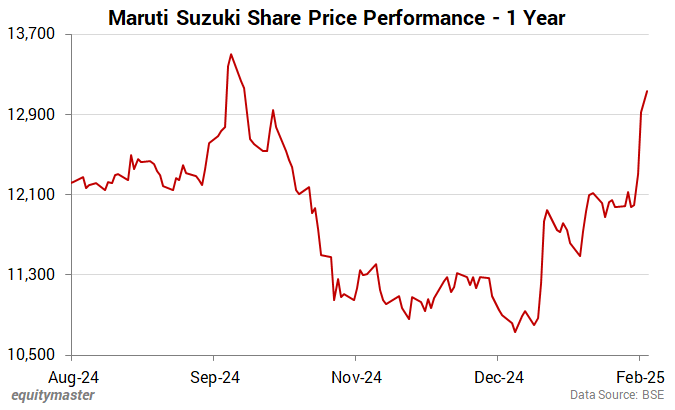
#5 Maruti Suzuki
Last on the list is Maruti Suzuki.
Maruti Suzuki is involved in the manufacturing of electric vehicle (EV) batteries through a joint venture with Suzuki Motor Corporation, Denso Corporation, and Toshiba Corporation. The company is also working on developing EV models.
In 2024, Maruti Suzuki announced a significant investment of Rs 382 bn for setting up a second plant in Gujarat and adding a fourth production line at the Suzuki Motor Gujarat plant.
The new plant will have a production capacity of 1 million units per annum, up from the current 750,000 units.
Given these developments and the government's push for domestic manufacturing in the EV sector, Maruti Suzuki stands to benefit significantly from these initiatives.
The company is not only focusing on the Indian market but also plans to export its EV models to Japan and European countries.
For more details, see the Maruti Suzuki company fact sheet and quarterly results.
Conclusion
With the government's renewed push towards electric mobility through the PM E-DRIVE scheme and its focus on reducing battery costs and promoting recycling, the EV battery sector is poised for long-term growth.
While the absence of FAME subsidies signals a policy shift, the emphasis on domestic manufacturing and recycling indicates a strong commitment to building a self-sustaining EV ecosystem.
The NITI Aayog report highlighting a projected 128 GWh demand for recycled batteries by 2030 underscores the sector's potential. Companies receiving budgetary support in 2025 could be well-positioned to benefit from this demand surge.
However, investors should assess individual companies' execution capabilities, technology, and raw material sourcing before making investment decisions.
Investors should evaluate the company's fundamentals, corporate governance, and valuations of the stock as key factors when conducting due diligence before making investment decisions.
--- Advertisement ---
Investment in securities market are subject to market risks. Read all the related documents carefully before investing
Which businesses are most likely to emerge stronger over the next 3 to 5 years?
After screening thousands of listed companies, comparing industries, and examining balance sheets...
Our research team discovered some of the strongest opportunities in what we call... Essential Stocks.
Opportunities like this do not remain hidden forever.
Disclaimer: This article is for information purposes only. It is not a stock recommendation and should not be treated as such. Learn more about our recommendation services here...
ABOUT EQUITYMASTER
Since 1996, Equitymaster has been the source for honest and credible opinions on investing in India. With solid research and in-depth analysis Equitymaster is dedicated towards making its readers- smarter, more confident and richer every day. Here's why hundreds of thousands of readers spread across more than 70 countries Trust Equitymaster.
PREMIUM PRODUCTS
- Hidden Treasure
- Forever Stocks
- Big Wave Profits
- Equitymaster Venture
- Microcap Millionaires
- Momentum Profits
- Double Income
- Midcap Value Alert
- Exponential Profits
- Annual Breakout Alert
- Lazy Millionaire
- Phase One Alert
- Smallcap AlphaQuest
- InsiderPro Stocks
- StockSelect
- Private Briefing
- Active Wealth Multiplier 2030
- FundSelect
- Fund Advantage
QUICK LINKS
POPULAR TOPICS
- Multibagger Penny Stocks
- Basics of Value Investing
- Benjamin Graham
- How to Invest in Gold
- How to Invest in Silver
- Best Stocks to Buy Today
- Best Small-cap Stocks to Buy
- Best Bluechip Stocks to Buy
- Guide to Penny Stocks
- How to Invest in the Share Market
- Warren Buffett - The Value Investor
- Pick the Best Multibagger Stocks
TRENDING TOPICS
- Best Defence Stocks in India
- Upcoming Dividend Stocks
- Best Semiconductor Stocks in India
- Data Center Stocks in India
- Best Railway Stocks in India
- Best Solar Stocks in India
- Fastest Growing Stocks in India
- List of BSE Sensex 30 Stocks
- Adani Group Shares
- Stocks Recently Bought by FIIs in India
- Top Value Stocks in India


LEGAL DISCLAIMER:
Investment in securities market are subject to market risks. Read all the related documents carefully before investing.
Registration granted by SEBI, enlistment with BSE as IA and RA, and certification from NISM in no way guarantee performance of the intermediary or provide any assurance of returns to investors.
All rights reserved. Any act of copying, reproducing or distributing any content from this website whether wholly or in part, for any purpose without the permission of Quantum Information Services Private Limited is strictly prohibited and shall be deemed to be copyright infringement.
Quantum Information Services Private Limited (QIS) is a SEBI registered Research Analyst (bearing registration no INH000021128) and Investment Adviser(Reg. No: INA000000680). Consequent upon the merger of Equitymaster Research Private Limited into QIS, effective October 30, 2025 QIS owns and operates brand 'Equitymaster' and website www.equitymaster.com. This does not constitute or is not intended to constitute an offer to buy or sell, or a solicitation to an offer to buy or sell financial products, units or securities and QIS including its employees, personnel, directors, associates will not be liable for any losses (direct or indirect) incurred or investment(s) made or decisions taken/or not taken based on the information provided herein. All content and information is provided on an 'As Is' basis by QIS. Information herein is believed to be reliable but QIS does not warrant its completeness or accuracy and expressly disclaims all warranties and conditions of any kind, whether express or implied. The services rendered by QIS are on a best effort basis. QIS does not assure or guarantee the user any minimum or fixed returns. The securities quoted, if any are for illustration only and are not recommendatory. Use of this information is at the user's own risk. The user must make his own investment decisions based on his specific investment objective and financial position and using such independent advisors as he believes necessary. This is not directed for access or use by anyone in a country, especially, USA, Canada or the European Union countries, where such use or access is unlawful or which may subject QIS or its affiliates to any registration or licensing requirement.
The performance data quoted represents past performance and does not guarantee future results. As a condition to accessing QIS's content and website, you agree to our Terms and Conditions of Use, available here
Equitymaster requests your view! Post a comment on "5 Stocks to Watch as India Pushes for Domestic EV Battery Manufacturing in Budget 2025". Click here!
Comments are moderated by Equitymaster, in accordance with the Terms of Use, and may not appear
on this article until they have been reviewed and deemed appropriate for posting.
In the meantime, you may want to share this article with your friends!