

Investment in securities market are subject to market risks. Read all the related documents carefully before investing
Two Years of Market Correction
Is This Your Buying Window?
See Where the Opportunities are Emerging for the Next 3-5 Years
**Important: We hate spam as much as you do. Check out our Privacy Policy and Terms Of Use.
5 Debt-Free Small Caps Poised for Long-Term Success
 Image source: ChatGPT
Recently, the Nifty has experienced a significant correction of about 15% from its peak in September 2024.
Amid the relentless turbulence rattling financial markets, small-cap stocks have found themselves caught in the crosshairs of investor scepticism. The Nifty Smallcap 250 index has fallen to 13,636 from 18,500 in September 2024.
Yet, in a storm of selloffs and shrinking valuations, a rare breed of companies stands resilient: debt-free small caps.
Safe from balance sheet vulnerabilities, these nimble contenders aren't just surviving the chaos, they're quietly positioning themselves to thrive.
In this article, we unveil five such companies across diverse sectors.
We have filtered these stocks using the Equitymaster's top debt free smallcap companies in India screener.
We removed all the stocks with debt. We also filtered out all the loss-making companies.
Take a look...
#1 Tata Technologies
First on the list is Tata Technologies, a global engineering and product development digital services company. It helps clients create better products and experiences.
Its service portfolio focuses on automotive, aerospace, and industrial heavy machinery. The company's service portfolio is evolving from mechanical oriented embedded electronics to Software Defined Vehicles (SDV).
Coming to its financial performance, the company has delivered a solid top-line growth of 29% compounded annual growth rate (CAGR) over a 3-year period and a net profit CAGR of 42%.
The company has a pristine balance sheet. The company's total debt is zero compared to its cash equivalents of Rs 8,130 million (m). It primarily relies on cash generated from operating activities to fulfil its working capital and capital expenditure requirements.
Despite such good fundamentals the stock is stuck in a downtrend for the past year because of anaemic growth in its sales in recent quarters.
Here's how the stock price has performed in the past 1 year.

Looking ahead, Tata Technologies management expects sequential revenue growth to increase, driven by the order book and pipeline.
It remains committed to its medium to long-term margin aspirations of 20% plus and expects to benefit from structural tailwinds in the industry.
The management is incredibly bullish about its aerospace business. They expect it to grow at the fastest rate off a relatively small base to increasingly become an important part of its business.
The automotive and industrial heavy machinery segments are also expected to grow well.
The company is benefitting from OEMs wanting to consolidate the portfolio and resisting the technology gap between themselves and Chinese OEMs.
For more details, check out Tata Technologies' financial factsheet.
#2 Indraprastha Gas
Coming second on the list is Indraprastha Gas, a leading City Gas Distribution (CGD) company in India. It provides natural gas to domestic, commercial, industrial, and transport sectors through its distribution network.
Its core business is the distribution of Compressed Natural Gas (CNG) and Piped Natural Gas (PNG). IGL's operations include Delhi, as well as regions in Uttar Pradesh, Haryana, and Rajasthan.
Coming to its financial performance, the stock has delivered a solid top-line growth of 42 % CAGR over the 3-year period and a net profit CAGR of 20% over the same period.
The last 3-year return on equity (ROE) has been 21%. The company is debt-free with cash equivalents of 18,246 m.
Looking ahead, Indraprastha Gas aims to achieve a sales volume of 9.5 million metric standard cubic meters per day (MMSCMD) for FY25. For FY26, it is targeting a 10% to 12% growth. This translates to an addition of 1 million each year.
The company aims to maintain an earnings before interest, taxes, depreciation, and amortization (EBITDA) of Rs 7-8 per standard cubic meter (SCM) annually.
However, due to a reduction in Administered Price Mechanism (APM) gas allocation and price revisions, there is stress on the operating profit.
The company has planned a capex of Rs 17 billion (bn) for the current year. A significant portion of this will be in Delhi NCR (45-55%), with the remaining in other regions.
These plans are envisaged to be funded through internal accruals, available liquidity, and security deposits without availing any debt.
Indraprastha Gas is undertaking several new initiatives to expand its business and promote sustainable energy solutions. It is planning to set up LNG fuel stations.
It has already commissioned one LNG station and is in advanced stages of planning and construction for five to six more stations. Agreements for setting up of 19 CBG plants have been signed.
The company has plans to build around 5,000 Compressed Biogas Plants (CBG) under the Sustainable Alternative Towards Affordable Transportation (SATAT) program.
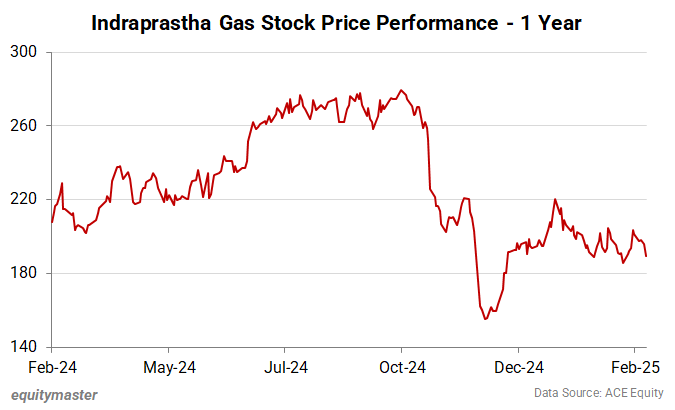
While the company's ambitious growth plans paint a promising picture for the future, the stock's performance over the past year, suggests that markets are worried about its near-term prospects.
Here's how the stock price has performed in the past 1 year.
For more details, check out Indraprastha Gas' financial factsheet.
#3 Gillette India
At number three comes Gillette India, established in India in 1984 and acquired by P&G in 2005. It focuses on the manufacturing and selling of branded packaged fast-moving consumer goods (FMCG) in the grooming and oral care sectors.
The company has delivered a top-line growth of 10% CAGR over the 3-year period and a net profit CAGR of 10% over the same period.
Its balance sheet is very lean and clean with zero debt for more than a decade. The company's ability to maintain a zero-debt balance sheet demonstrates the asset-light nature of the business and its high margins.
The last 3-year return on equity (ROE) has been 39%. Despite strong fundamentals, the stock has given up most of its gain in the last few months.
Here's how the stock price has performed in the past 1 year.
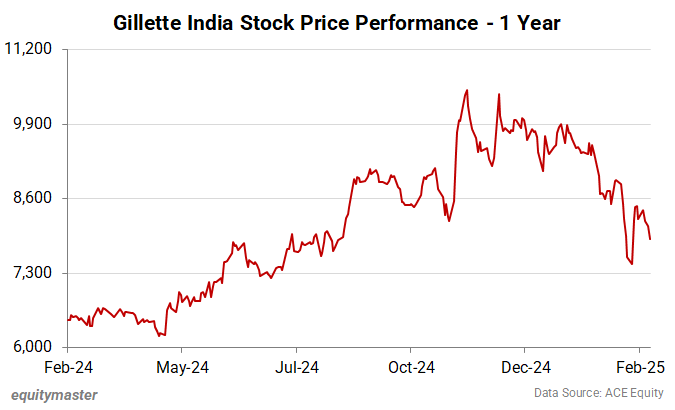
This price performance could be attributed to muted sales and profit growth over the last few quarters.
The company strives to grow the bottom-line ahead of the top-line in the foreseeable future, which will enable it to fund innovation and absorb macro headwinds.
The management expects oral care as a category to demonstrate growth in mid-single digits. The aim is to drive growth by bringing more consumers into the oral care portfolio.
Currently, the market share for Gillette is at its highest ever level, upwards of 60%.
The company sees a trend of premiumisation in India, with consumers willing to pay higher prices for superior products as per capita incomes rise.
For more information, check out Gillette India's financial factsheet.
#4 Gujarat Gas
Fourth on the list is Gujarat Gas, another city gas distribution company. It operates in 27 geographical areas across six states and one union territory.
The company has consistently pared down its debt over the last decade. In 2014, the company had almost Rs 16 bn of long-term borrowings, which it successfully brought down to zero.
It has delivered a good top-line growth of 17% CAGR over the 3-year period and a net profit CAGR of -5% over the same period. The last 3-year return on equity (ROE) has been 21%.
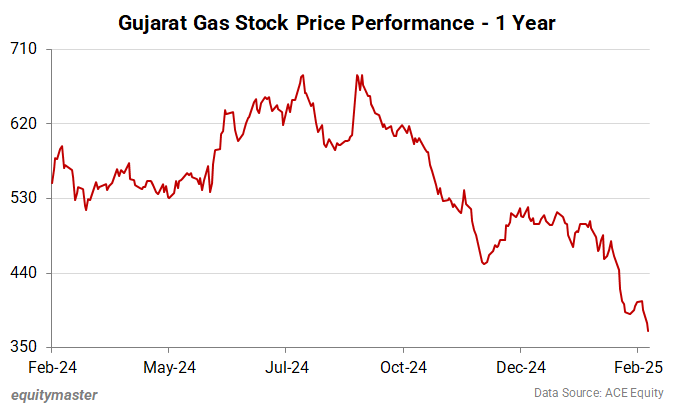
The markets have punished the stock for not growing its profits despite sales growth.
Here's how the stock price has performed in the past 1 year.
Looking ahead, Gujarat Gas aims for volume growth of around 5-7% YoY, with non-Morbi volume growth aligning with this overall guidance.
It plans to incur close to Rs 10 bn of capex for FY25. For the next 3-5 years, the capex will be close to Rs 10-15 bn. For FY26, the planned capex is estimated to be not less than Rs 10 bn, split almost 50:50 between newer and existing areas.
The company plans 22 new CNG stations and 62 upgradations for this financial year, expecting to add triple digit CNG station numbers by the end of the financial year.
The guidance is for 200 plus CNG stations over the next 2-3 years, with around 25-30 stations planned to be added in FY25.
Gujarat Gas has strengthened its position in the CGD sector and will take up opportunities emerging in the energy sector. It is focusing on increasing volumes while maintaining a fine balance between volumes and margins.
For more information, check out Gujarat Gas' financial factsheet.
#5 Multi Commodity Exchange of India
Fifth on the list is Multi Commodity Exchange of India (MCX). It's the leading commodity derivatives exchange in India.
It offers a platform for trading in commodity derivatives, by offering derivative contracts for bullion, industrial metals, energy, agricultural commodities, and indices.
The company has delivered revenue growth of 21% CAGR over the 3-year period and a net profit CAGR of -23% over the same period. The last 3-year return on equity (ROE) has been 9%.
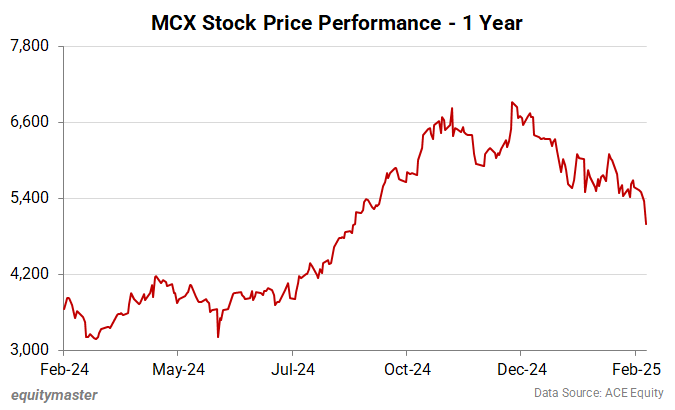
This might not look like a great performance, but the real operating leverage of the business has just started showing in the last few quarters.
This has led to a one-way rally in the stock price which only stopped in December last year after the markets peaked.
Here's how the stock price has performed in the past 1 year.
Looking ahead, the company management is optimistic about sustained growth.
Several new products were launched in FY24 and MCX is considering launching derivative products on electricity and options contracts, with agri contracts for cotton seed wash oil and crude sunflower oil planned for launch in the near future.
The company is focused on expanding market participation, investor awareness, and technology investments, while also strengthening its core technology infrastructure and ensuring regulatory compliance.
While the company acknowledges regulatory and market volatility risks, it aims to continue innovating and introducing new derivative products.
For more information, check out Multi Commodity Exchange of India's financial factsheet.
Conclusion
These five companies stand out not just for their robust balance sheets but also for their ability to navigate challenges while capitalizing on sectoral tailwinds.
Their zero-debt status shields them from interest rate risks and liquidity crunches, allowing them to reinvest cash flows into innovation, expansion, and operational resilience.
However, a debt-free balance sheet is only one piece of the puzzle. Investors should evaluate the company's fundamentals, corporate governance, and valuations of the stock as key factors when conducting due diligence before making investment decisions.
The recent underperformance of these stocks amid the broader market correction also underscores the importance of patience and a long-term perspective.
Valuations matter. Even the strongest companies in the stock market can become unattractive at high valuations.
As markets recalibrate, these debt-free small caps may offer compelling entry points for discerning investors-but only if backed by thorough research, prudent risk assessment, and alignment with broader portfolio goals.
Happy investing.
--- Advertisement ---
Investment in securities market are subject to market risks. Read all the related documents carefully before investing
Which businesses are most likely to emerge stronger over the next 3 to 5 years?
After screening thousands of listed companies, comparing industries, and examining balance sheets...
Our research team discovered some of the strongest opportunities in what we call... Essential Stocks.
Opportunities like this do not remain hidden forever.
Disclaimer: This article is for education purposes only. It is not a recommendation and should not be treated as such. Learn more about our recommendation services here...
ABOUT EQUITYMASTER
Since 1996, Equitymaster has been the source for honest and credible opinions on investing in India. With solid research and in-depth analysis Equitymaster is dedicated towards making its readers- smarter, more confident and richer every day. Here's why hundreds of thousands of readers spread across more than 70 countries Trust Equitymaster.
PREMIUM PRODUCTS
- Hidden Treasure
- Forever Stocks
- Big Wave Profits
- Equitymaster Venture
- Microcap Millionaires
- Momentum Profits
- Double Income
- Midcap Value Alert
- Exponential Profits
- Annual Breakout Alert
- Lazy Millionaire
- Phase One Alert
- Smallcap AlphaQuest
- InsiderPro Stocks
- StockSelect
- Private Briefing
- Active Wealth Multiplier 2030
- FundSelect
- Fund Advantage
QUICK LINKS
POPULAR TOPICS
- Multibagger Penny Stocks
- Basics of Value Investing
- Benjamin Graham
- How to Invest in Gold
- How to Invest in Silver
- Best Stocks to Buy Today
- Best Small-cap Stocks to Buy
- Best Bluechip Stocks to Buy
- Guide to Penny Stocks
- How to Invest in the Share Market
- Warren Buffett - The Value Investor
- Pick the Best Multibagger Stocks
TRENDING TOPICS
- Best Defence Stocks in India
- Upcoming Dividend Stocks
- Best Semiconductor Stocks in India
- Data Center Stocks in India
- Best Railway Stocks in India
- Best Solar Stocks in India
- Fastest Growing Stocks in India
- List of BSE Sensex 30 Stocks
- Adani Group Shares
- Stocks Recently Bought by FIIs in India
- Top Value Stocks in India


LEGAL DISCLAIMER:
Investment in securities market are subject to market risks. Read all the related documents carefully before investing.
Registration granted by SEBI, enlistment with BSE as IA and RA, and certification from NISM in no way guarantee performance of the intermediary or provide any assurance of returns to investors.
All rights reserved. Any act of copying, reproducing or distributing any content from this website whether wholly or in part, for any purpose without the permission of Quantum Information Services Private Limited is strictly prohibited and shall be deemed to be copyright infringement.
Quantum Information Services Private Limited (QIS) is a SEBI registered Research Analyst (bearing registration no INH000021128) and Investment Adviser(Reg. No: INA000000680). Consequent upon the merger of Equitymaster Research Private Limited into QIS, effective October 30, 2025 QIS owns and operates brand 'Equitymaster' and website www.equitymaster.com. This does not constitute or is not intended to constitute an offer to buy or sell, or a solicitation to an offer to buy or sell financial products, units or securities and QIS including its employees, personnel, directors, associates will not be liable for any losses (direct or indirect) incurred or investment(s) made or decisions taken/or not taken based on the information provided herein. All content and information is provided on an 'As Is' basis by QIS. Information herein is believed to be reliable but QIS does not warrant its completeness or accuracy and expressly disclaims all warranties and conditions of any kind, whether express or implied. The services rendered by QIS are on a best effort basis. QIS does not assure or guarantee the user any minimum or fixed returns. The securities quoted, if any are for illustration only and are not recommendatory. Use of this information is at the user's own risk. The user must make his own investment decisions based on his specific investment objective and financial position and using such independent advisors as he believes necessary. This is not directed for access or use by anyone in a country, especially, USA, Canada or the European Union countries, where such use or access is unlawful or which may subject QIS or its affiliates to any registration or licensing requirement.
The performance data quoted represents past performance and does not guarantee future results. As a condition to accessing QIS's content and website, you agree to our Terms and Conditions of Use, available here
Equitymaster requests your view! Post a comment on "5 Debt-Free Small Caps Poised for Long-Term Success". Click here!
Comments are moderated by Equitymaster, in accordance with the Terms of Use, and may not appear
on this article until they have been reviewed and deemed appropriate for posting.
In the meantime, you may want to share this article with your friends!