

Investment in securities market are subject to market risks. Read all the related documents carefully before investing
India's Bull Market
Has The Pause Finally Ended?
Global developments could be setting the stage for a new rally
**Important: We hate spam as much as you do. Check out our Privacy Policy and Terms Of Use.
Next D-Mart Like Stock 
We all know how its unique cost focussed business model has allowed D-Mart or Avenue Supermart as its corporate name is, to stand out amongst its loss making retail peers as a profitable and sustainable growth oriented business.
Similarly, I believe this company has a business model to be the D-Mart of medical procedures. Like D-Mart, even with affordability as its core objective, the business is scalable, sustainable and shareholder friendly.
Tell me, what was costing Rs 1.5 lakhs ...31 years ago that costs the same today?
Dr Devi Shetty, founder and Chairman of Narayana Hrudayalaya, asked this in the company's latest annual report.
Dr Shetty is a renowned cardiac surgeon and a Padma Bhushan recipient, for his pioneering efforts in affordable health care.
After having established a heart centre at the BM Birla Hospital, Kolkata, in 1989, and then the Manipal Heart Foundation at Manipal Hospitals in Bengaluru in 1997, Dr Shetty decided to turn an entrepreneur.
So, in the year 2000, he founded Narayana Hrudayalaya (the first 225-bed Narayana Health City hospital, located on the outskirts of Bengaluru) with focus on affordable cardiac care.
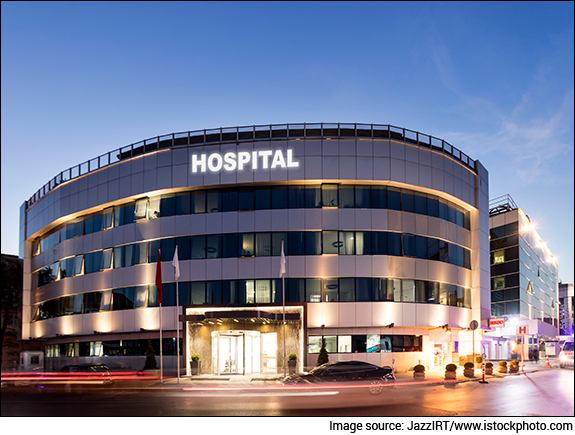
But what is the need for such focus on affordable medical care?
India currently has 1.3 hospital beds per 1,000 population. There is also a shortage of skilled health workers, with 0.65 physicians per 1,000 people (the World Health Organisation standard is 1 per 1,000 people) and 1.3 nurses per 1,000 people.
An additional 3 million beds will be needed for India to achieve the target of 3 beds per 1,000 people by 2025.
Further, another 1.54 million doctors and 2.4 million nurses will be required to meet the growing demand for healthcare in India. Demand will also be created on account of initiatives like Ayushman Bharat, which will boost requirements for health personnel not only in larger cities but also Tier 2 and Tier 3 cities and villages.

India will therefore need to increase the numbers of trained health personnel across various categories to achieve a ratio of at least 2.5 doctors and 5 nurses per 1,000 people by 2034.
India already competes with Asian peers in providing cutting edge medical procedures at a fraction of the global costs. Over the years, this edge will help Indian hospital chains like Narayana Hrudayalaya to attract a substantial number of overseas patients.
Let's understand a bit more about Narayana Hrudayalaya...
In 2022, Narayana Hrudayalaya operated a network of 21 hospitals, 4 heart centres and 18 primary healthcare facilities, totaling nearly 6,500 beds across India. Although built on the foundation of a single specialty, the institution has also pivoted itself well into a large-format multi-specialty health care provider.
Narayana Hrudayalaya also has a 110-bed hospital in Cayman Islands, a British territory in the Caribbean region.
Cardiac care remains core to Narayana Hrudayalaya. It accounts for close to 45% of its revenue.

Over the last two decades, it has also expanded its focus to over 30 medical specialties, including cancer care, neurology and neurosurgery, orthopedics, nephrology and urology, and gastroenterology.
Before he set up Narayana Hrudayalaya, founder Dr Devi Shetty, who is known for having been personal physician to Mother Teresa, had to decide whether to build a not-for-profit or for-profit entity. Weighing in against the former was access to funding.
Dr Shetty believes charity is not scalable, but a good business is.
Narayana Hrudayalaya does have a business model in which operating costs are kept under tight control. And there are many facets to it.
Now, as an investor it is important that you take note of some of the critical parameters for hospital stocks that I am going to talk about here...
First, there is the Average Realisation Per Occupied Bed or ARPOB, an industry matrix that hospitals report and compare. This is similar to what hotels report and compare as average room rates or ARR.

Narayana Hrudayalaya has an Average Realisation Per Occupied Bed of Rs 0.8 m per annum compared to Rs 15 m of other organised private hospital chains. This is primarily because the institution focuses on keeping the facilities affordable. The hospitals have more general wards than private and deluxe rooms. The latter account for only 30% of Narayana Hrudayalaya bed inventory. And that keeps the hospital chain's ARPOB considerably lower.
Even though the ARPOB is different in different regions, due to its diversified presence, Narayana Hrudayalaya is able to sustain healthy operating margins.
Yet another matrix, where Narayana Hrudayalaya stands out is the capital cost per bed.
Typically, for any private tertiary care hospital chain, the capital cost per bed is anywhere between Rs 7 m and Rs 20 m, depending on the location and room configurations, among other factors. Narayana Hrudayalaya had an average capital cost per bed of Rs 3.9 m in 2022. This is because most of the hospitals are on a revenue-share basis with various other hospital owners and public entities.
Finally, the most important differentiating factor is the way in which Narayana Hrudayalaya compensates doctors. Instead of incentivizing doctors for number of surgeries performed, Narayana Hrudayalaya offers the doctors and surgeons on roll a fixed salary. This way, the company does nit have to pay commission to freelance doctors, and incremental cost is saved, reducing the total expenses of surgeries.
On an average, Narayana Hrudayalaya performs 150 major surgeries per day. This gives the company the economies of scale, wherein the cost per surgery is reduced by increasing the number of surgeries performed per day.
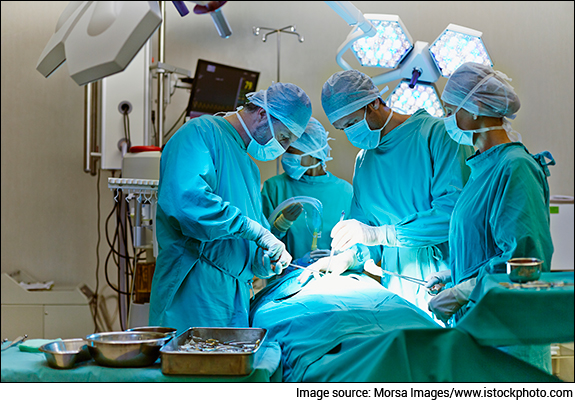
Narayana Hrudayalaya has finetuned the surgery process into a factory production line-like system wherein operations are performed quickly and effectively. With the help of task-shifting, every surgeon takes up only the task they are qualified to do. This way, many surgeries are performed in a row driving the cost down, without compromising the quality. Each surgeon performs 400 to 600 procedures annually. Also, bulk and centralized buying of medical equipment and medicines helps reduce costs.
Now, what is the link between Narayana Hrudayala and D-Mart?
We all know how its unique cost focussed business model has allowed D-Mart or Avenue Supermart as its corporate name is, to stand out amongst its loss making retail peers as a profitable and sustainable growth oriented business.
Similarly, I believe its business model allows Narayana Hrudayalaya to be the D-Mart of medical procedures. Like D-Mart, even with affordability as its core objective, the business model is scalable, sustainable and shareholder friendly.
Do note this NOT a recommendation on the stock but just an analysis of the business model of the company. A deeper understanding of the stock's fundamentals and valuations would be absolutely necessary before acting on the stock. Do consult your investor advisor if necessary.
Hope you like this video. Thanks for watching.

Tanushree Banerjee (Research Analyst), is the editor of Stock Select and Forever Stocks. Tanushree started her career at Equitymaster covering the banking and financial sector stocks and scrutinising RBI policies. Over the last decade, she developed Equitymaster's research processes that helped us pick out various multibaggers, across all sectors. A firm believer of "safety first" when it comes to investing, Tanushree closely follows the investing philosophies of Warren Buffett, Jeremy Grantham, and Joel Greenblatt.
ABOUT EQUITYMASTER
Since 1996, Equitymaster has been the source for honest and credible opinions on investing in India. With solid research and in-depth analysis Equitymaster is dedicated towards making its readers- smarter, more confident and richer every day. Here's why hundreds of thousands of readers spread across more than 70 countries Trust Equitymaster.
PREMIUM PRODUCTS
- Hidden Treasure
- Forever Stocks
- Big Wave Profits
- Equitymaster Venture
- Microcap Millionaires
- Momentum Profits
- Double Income
- Midcap Value Alert
- Exponential Profits
- Annual Breakout Alert
- Lazy Millionaire
- Phase One Alert
- Smallcap AlphaQuest
- InsiderPro Stocks
- StockSelect
- Private Briefing
- Active Wealth Multiplier 2030
- FundSelect
- Fund Advantage
QUICK LINKS
POPULAR TOPICS
- Multibagger Penny Stocks
- Basics of Value Investing
- Benjamin Graham
- How to Invest in Gold
- How to Invest in Silver
- Best Stocks to Buy Today
- Best Small-cap Stocks to Buy
- Best Bluechip Stocks to Buy
- Guide to Penny Stocks
- How to Invest in the Share Market
- Warren Buffett - The Value Investor
- Pick the Best Multibagger Stocks
TRENDING TOPICS
- Best Defence Stocks in India
- Upcoming Dividend Stocks
- Best Semiconductor Stocks in India
- Data Center Stocks in India
- Best Railway Stocks in India
- Best Solar Stocks in India
- Fastest Growing Stocks in India
- List of BSE Sensex 30 Stocks
- Adani Group Shares
- Stocks Recently Bought by FIIs in India
- Top Value Stocks in India


LEGAL DISCLAIMER:
Investment in securities market are subject to market risks. Read all the related documents carefully before investing.
Registration granted by SEBI, enlistment with BSE as IA and RA, and certification from NISM in no way guarantee performance of the intermediary or provide any assurance of returns to investors.
All rights reserved. Any act of copying, reproducing or distributing any content from this website whether wholly or in part, for any purpose without the permission of Quantum Information Services Private Limited is strictly prohibited and shall be deemed to be copyright infringement.
Quantum Information Services Private Limited (QIS) is a SEBI registered Research Analyst (bearing registration no INH000021128) and Investment Adviser(Reg. No: INA000000680). Consequent upon the merger of Equitymaster Research Private Limited into QIS, effective October 30, 2025 QIS owns and operates brand 'Equitymaster' and website www.equitymaster.com. This does not constitute or is not intended to constitute an offer to buy or sell, or a solicitation to an offer to buy or sell financial products, units or securities and QIS including its employees, personnel, directors, associates will not be liable for any losses (direct or indirect) incurred or investment(s) made or decisions taken/or not taken based on the information provided herein. All content and information is provided on an 'As Is' basis by QIS. Information herein is believed to be reliable but QIS does not warrant its completeness or accuracy and expressly disclaims all warranties and conditions of any kind, whether express or implied. The services rendered by QIS are on a best effort basis. QIS does not assure or guarantee the user any minimum or fixed returns. The securities quoted, if any are for illustration only and are not recommendatory. Use of this information is at the user's own risk. The user must make his own investment decisions based on his specific investment objective and financial position and using such independent advisors as he believes necessary. This is not directed for access or use by anyone in a country, especially, USA, Canada or the European Union countries, where such use or access is unlawful or which may subject QIS or its affiliates to any registration or licensing requirement.
The performance data quoted represents past performance and does not guarantee future results. As a condition to accessing QIS's content and website, you agree to our Terms and Conditions of Use, available here
Equitymaster requests your view! Post a comment on "Next D-Mart Like Stock". Click here!
Comments are moderated by Equitymaster, in accordance with the Terms of Use, and may not appear
on this article until they have been reviewed and deemed appropriate for posting.
In the meantime, you may want to share this article with your friends!