


Equitymaster's 2026 Grand Festive Offer
Two Research Reports, Six Stocks
3 Small Cap, 3 Large Cap
**Important: We hate spam as much as you do. Check out our Privacy Policy and Terms Of Use.
5 Defence Stocks Set to Benefit From DRDO's Emergency Procurement Drive
 Image source: onurdongel/www.istockphoto.com
With global tensions on the rise and the need for rapid military deployment, India's defence forces have been granted emergency procurement powers - allowing them to purchase critical weapon systems worth up to Rs 3 billion (bn) per item.
In response, the Defence Research and Development Organisation (DRDO) has submitted a list of 28 indigenous weapon systems that have performed satisfactorily in operations and are now cleared for swift induction across the Army, Navy, and Air Force.
From laser-guided bombs and anti-ship missiles to man-portable ATGMs and smart airfield weapons, Rudram anti-radiation missiles, helicopter-launched and ground-launched Nag missiles, DRDO's list includes some of India's most cutting-edge indigenous technologies.
Key systems on offer include:
- Air-to-air and air-to-ground missiles
- Laser-guided bombs
- Rudram anti-radiation missiles
- Torpedoes and advanced lightweight torpedoes
- Naval anti-ship missiles
- Helicopter-launched and ground-launched Nag missiles
- Shoulder-fired air defence & anti-tank missiles
- Man-Portable Anti-Tank Guided Missiles (MPATGM)
- Very Short-Range Air Defence Systems (VSHORADS)
- Smart Anti-Airfield Weapons (SAAW)
- Long-range glide bombs
- Ammunition for 155 mm artillery guns
DRDO has also specified the vendors and quantities available for procurement in the next 6-12 months.
Here are four defence stocks that are likely to benefit from this indigenous weapons drive.
#1 Bharat Dynamics
First on the list is Bharat Dynamics.
The DRDO has also listed the names of production agencies for its various systems, from which the forces can directly procure these weapons.
As a key manufacturing partner, BDL is the source for multiple items the armed forces can directly procure under the emergency powers.
Bharat Dynamics Limited (BDL) manufactures or supplies three of the listed key systems: Man-Portable Anti-Tank Guided Missile (MPATGM), Very Short-Range Air Defence (VSHORAD) Systems, Advanced Light-Weight Torpedoes.
Man-Portable Anti-Tank Guided Missiles (MPATGM):
BDL manufactures these lightweight, tripod-launched anti-tank missiles at its Bhanur unit in Telangana. With a range of 2.5 km, the MPATGM is designed for precision strikes on armoured targets. BDL also produces other established systems like Milan-2T and Konkurs-M.
Very Short-Range Air Defence (VSHORAD) Systems:
Bharat Dynamics Ltd (BDL) plays a key role in strengthening India's short-range air defence through its VSHORAD systems. One standout is the Laser Beam Riding Man Portable Air Defence System (LBRM), developed in partnership with global defence major Thales. This man-portable system is designed to take down low-flying threats like helicopters, UAVs, and aircraft. With technology transfer from Thales, BDL is helping India ramp up its indigenous capability in this critical defence segment.
Advanced Light-Weight Torpedoes (TAL/Shyena):
BDL manufactures the Torpedo Advanced Light (TAL), also known as Shyena, an anti-submarine warfare torpedo developed by DRDO for the Indian Navy. These torpedoes are produced at BDL's Visakhapatnam facility and are designed for deployment from ships, submarines, and aircraft.
Smart Anti-Airfield Weapon (SAAW):
The Smart Anti-Airfield Weapon (SAAW) is a 125 kg glide bomb developed by DRDO to disable enemy runways, bunkers, and radar sites from a distance of up to 100 km. It carries an 80 kg high-explosive warhead and offers a cost-effective alternative to stand-off missiles. Bharat Dynamics Ltd (BDL) has been designated as the production agency for this system.
The company is a key player in India's defence sector, specifically focused on the manufacturing of guided missile systems and related equipment for the Indian Armed Forces.
Going forward, BDL is expanding its scope to include next-generation solutions such as drone-delivered payloads.
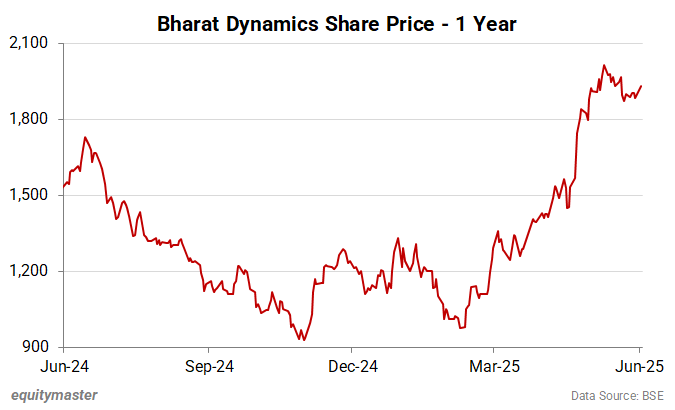
For more details, see the BHARAT DYNAMICS company fact sheet and quarterly results.
#2 Solar Industries
Next on the list is Solar Industries.
The company operates in the defence segment through its wholly owned subsidiary, Solar Defence & Aerospace Limited.
Solar recently signed a significant contract with the Ministry of Defence on 22 June 2025, valued at Rs 1.6 bn, for the supply of defence products. The contract mandates delivery within one year.
Just a day later, on 23 June 2025, the Indian Army inked a deal with Solar Defence & Aerospace to procure approximately 450 units of the Nagastra-1R loitering munition system.
This builds upon an earlier deal from June 2024, when Solar delivered the first batch of indigenously developed Nagastra-1 munitions via its then-subsidiary, Economic Explosives Ltd (EEL).
In addition to drones, Solar is also a critical supplier of rockets.
Through EEL, the company supplies Pinaka rockets, including:
- Area Denial Munition (ADM) Type-1 (DPICM)
- High Explosive Pre-Fragmented (HEPF) Mk-1 (Enhanced)
These rockets are key components of the Pinaka Multi-Barrel Rocket Launcher System, developed by DRDO for the Indian Army.
Earlier in February 2025, Solar Industries also secured a massive Rs 60.8 bn order for large-scale production of the Pinaka Rocket System - one of the largest defence deals for a private firm in India.
As DRDO gears up its emergency procurement list, Solar's advanced capabilities in munitions and rocketry make it a key private-sector beneficiary of India's growing defence indigenisation push.
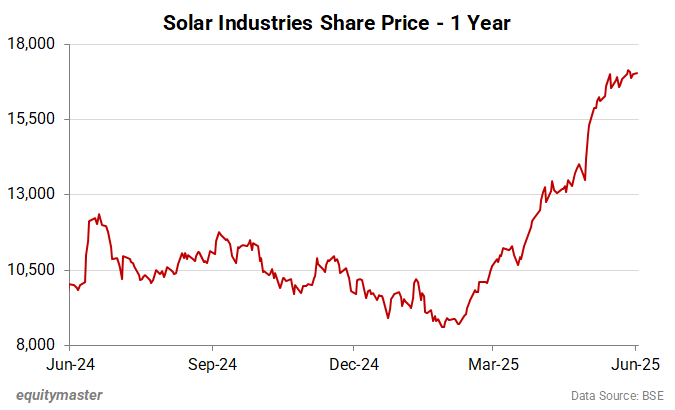
For more details, see the SOLAR INDUSTRIES company fact sheet and quarterly results.
#3 Bharat Electronics
Next on the list is Bharat Electronics.
The company specialises in designing and manufacturing advanced electronic systems for the Indian Armed Forces.
Its product portfolio includes radars and fire control systems, missile systems (notably the indigenous Akash Air Defence Weapon System), C4I (command, control, communications, computers, and intelligence) systems, electronic warfare systems, avionics equipment, naval systems like anti-submarine warfare solutions, electro-optics and tank electronics, and weapon upgrades, among others.
- Rudram-1, India's first indigenous anti-radiation missile, is jointly designed and manufactured by BEL and BDL.
- The missile, which targets enemy radar and surveillance systems, features in DRDO's emergency procurement list, potentially opening up new orders for BEL.
Going forward, the company is aggressively expanding through new strategic business units, manufacturing facilities, and partnerships, backed by a robust and growing order book.
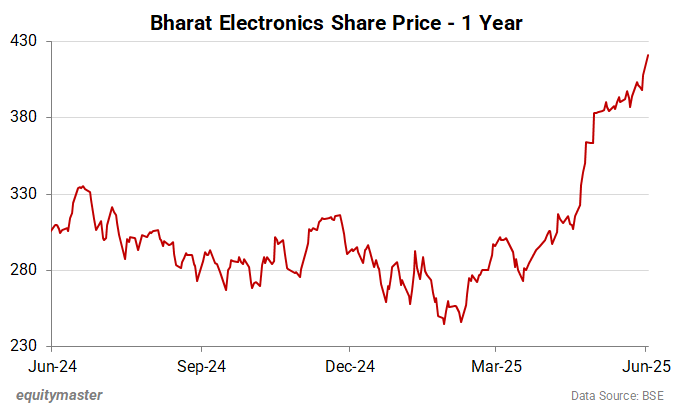
For more details, see the BHARAT ELECTRONICS company fact sheet and quarterly results.
#4 Hindustan Aeronautics Limited
Next on the list is HAL.
Hindustan Aeronautics (HAL) is one of the largest and most renowned aircraft manufacturing companies in India.
With a history spanning over seven decades, HAL has been instrumental in the design, development, and production of various aircraft, helicopters, and aero engines.
The company's notable achievements include the production of indigenous aircraft like the Tejas Light Combat Aircraft (LCA) and the Advanced Light Helicopter (ALH).
Among the 28 weapon systems cleared for emergency procurement, the helicopter-launched and ground-launched Nag missiles feature prominently - and HAL stands to benefit as the primary supplier of the missile launch platforms.
Helicopter-launched Nag Missiles:
These are integrated on to HAL-built combat helicopters - specifically the Rudra (armed version of Dhruv) and the Light Combat Helicopter (LCH) Prachand. HAL manufactures both aircraft and provides missile integration systems, enabling the deployment of the Nag missile from the air.
Ground-launched Nag Missiles:
Though launched from NAMICA (Nag Missile Carrier), HAL is the original manufacturer of the NAG platform components and its integration system.
With both variants now approved for fast-track procurement, HAL is expected to see increased demand.
Going forward, HAL is planning to significantly increase its production capacity, aiming for an annual production rate of 24 Tejas Mk1A aircraft by FY27.
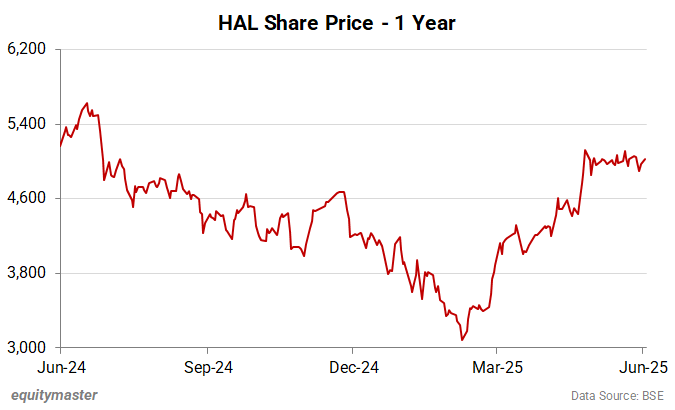
For more details, see the HINDUSTAN AERO. company fact sheet and quarterly results.
#5 Bharat Forge
Last on the list is Bharat Forge.
Bharat Forge in defence space supplies airframe structures, engine parts, and other key elements for military aircraft.
Bharat Forge is set to benefit from the emergency procurement of long-range glide bombs, one of the 28 weapon systems cleared by the Defence Ministry.
- The LRGB 'Gaurav', a 1,000 kg class indigenous glide bomb, has been designed by DRDO's Research Centre Imarat, Armament Research and Development Establishment, and Integrated Test Range (Chandipur).
- Bharat Forge is one of the Development-cum-Production Partners, alongside Adani Defence and other MSMEs, involved in realising this system.
With successful trials completed in the presence of DRDO and Indian Air Force officials, the weapon is now being prepared for induction.
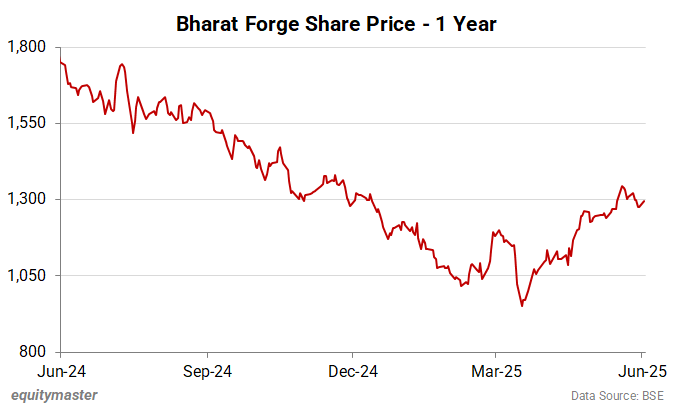
For more details, see the BHARAT FORGE company fact sheet and quarterly results.
Other Beneficiaries
Beyond the core defence stocks, Adani Enterprises and Premier Explosives also stand to gain from the DRDO's emergency procurement list.
Adani Enterprises, through Adani Defence and Aerospace, is involved in the development of the LRGB 'Gaurav', a 1,000-kg indigenous glide bomb featured in the DRDO list.
As a development and production partner, Adani could benefit from upcoming orders as the bomb moves toward induction.
Premier Explosives plays a critical role in supplying propellants, warheads, and rocket motors for key Indian missile systems like Akash, Agni, BrahMos, and Astra.
With multiple rocket and missile systems on the procurement list, the company is well-positioned to gain from the increased demand for Indigenous defence equipment.
Conclusion
India's defence sector is clearly on the rise. With defence exports projected to reach nearly Rs 240 bn in FY25-and the government targeting Rs 500 bn by 2029-the momentum is strong.
A big push for indigenisation, a robust pipeline of orders, and growing interest in high-tech segments like drones and smart munitions are setting the stage for sustained growth.
As this ecosystem expands, companies closely aligned with DRDO systems and indigenous manufacturing are poised to gain.
Investors should pay attention to factors like corporate governance, and growth potential before making investment decisions.
--- Advertisement ---
Investment in securities market are subject to market risks. Read all the related documents carefully before investing
Which businesses are most likely to emerge stronger over the next 3 to 5 years?
After screening thousands of listed companies, comparing industries, and examining balance sheets...
Our research team discovered some of the strongest opportunities in what we call... Essential Stocks.
Opportunities like this do not remain hidden forever.
Disclaimer: This article is for information purposes only. It is not a stock recommendation and should not be treated as such. Learn more about our recommendation services here...
ABOUT EQUITYMASTER
Since 1996, Equitymaster has been the source for honest and credible opinions on investing in India. With solid research and in-depth analysis Equitymaster is dedicated towards making its readers- smarter, more confident and richer every day. Here's why hundreds of thousands of readers spread across more than 70 countries Trust Equitymaster.
PREMIUM PRODUCTS
- Hidden Treasure
- Forever Stocks
- Super Sector Stocks
- Equitymaster Venture
- Microcap Millionaires
- Momentum Profits
- Double Income
- Midcap Value Alert
- Exponential Profits
- Annual Breakout Alert
- Lazy Millionaire
- Phase One Alert
- Smallcap AlphaQuest
- InsiderPro Stocks
- StockSelect
- Private Briefing
- Active Wealth Multiplier 2030
- FundSelect
- Fund Advantage
QUICK LINKS
POPULAR TOPICS
- Multibagger Penny Stocks
- Basics of Value Investing
- Benjamin Graham
- How to Invest in Gold
- How to Invest in Silver
- Best Stocks to Buy Today
- Best Small-cap Stocks to Buy
- Best Bluechip Stocks to Buy
- Guide to Penny Stocks
- How to Invest in the Share Market
- Warren Buffett - The Value Investor
- Pick the Best Multibagger Stocks
TRENDING TOPICS
- Best Defence Stocks in India
- Upcoming Dividend Stocks
- Best Semiconductor Stocks in India
- Data Center Stocks in India
- Best Railway Stocks in India
- Best Solar Stocks in India
- Fastest Growing Stocks in India
- List of BSE Sensex 30 Stocks
- Adani Group Shares
- Stocks Recently Bought by FIIs in India
- Top Value Stocks in India


LEGAL DISCLAIMER:
Investment in securities market are subject to market risks. Read all the related documents carefully before investing.
Registration granted by SEBI, enlistment with BSE as IA and RA, and certification from NISM in no way guarantee performance of the intermediary or provide any assurance of returns to investors.
All rights reserved. Any act of copying, reproducing or distributing any content from this website whether wholly or in part, for any purpose without the permission of Quantum Information Services Private Limited is strictly prohibited and shall be deemed to be copyright infringement.
Quantum Information Services Private Limited (QIS) is a SEBI registered Research Analyst (bearing registration no INH000021128) and Investment Adviser(Reg. No: INA000000680). Consequent upon the merger of Equitymaster Research Private Limited into QIS, effective October 30, 2025 QIS owns and operates brand 'Equitymaster' and website www.equitymaster.com. This does not constitute or is not intended to constitute an offer to buy or sell, or a solicitation to an offer to buy or sell financial products, units or securities and QIS including its employees, personnel, directors, associates will not be liable for any losses (direct or indirect) incurred or investment(s) made or decisions taken/or not taken based on the information provided herein. All content and information is provided on an 'As Is' basis by QIS. Information herein is believed to be reliable but QIS does not warrant its completeness or accuracy and expressly disclaims all warranties and conditions of any kind, whether express or implied. The services rendered by QIS are on a best effort basis. QIS does not assure or guarantee the user any minimum or fixed returns. The securities quoted, if any are for illustration only and are not recommendatory. Use of this information is at the user's own risk. The user must make his own investment decisions based on his specific investment objective and financial position and using such independent advisors as he believes necessary. This is not directed for access or use by anyone in a country, especially, USA, Canada or the European Union countries, where such use or access is unlawful or which may subject QIS or its affiliates to any registration or licensing requirement.
The performance data quoted represents past performance and does not guarantee future results. As a condition to accessing QIS's content and website, you agree to our Terms and Conditions of Use, available here
Equitymaster requests your view! Post a comment on "5 Defence Stocks Set to Benefit From DRDO's Emergency Procurement Drive". Click here!
Comments are moderated by Equitymaster, in accordance with the Terms of Use, and may not appear
on this article until they have been reviewed and deemed appropriate for posting.
In the meantime, you may want to share this article with your friends!