

Investment in securities market are subject to market risks. Read all the related documents carefully before investing
Equitymaster's 2026 Grand Festive Offer:
Get Rs 20,000 Worth of Research
For Rs 2,950 + GST.
**Important: We hate spam as much as you do. Check out our Privacy Policy and Terms Of Use.
Top 5 Energy Storage Stocks to Add to Your Watchlist
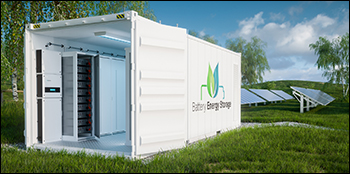 Image source: Petmal/www.istockphoto.com
The world is on the cusp of an energy revolution, driven by the urgent need to transition away from fossil fuels and embrace cleaner, more sustainable alternatives.
While renewable energy sources like solar and wind offer immense potential, their intermittent nature presents a significant challenge: how to store and distribute this energy effectively to meet consistent demand.
This is where energy storage comes into play. By developing innovative technologies capable of storing excess energy during peak production periods and releasing it during times of high demand, energy storage solutions are poised to unlock the full potential of renewable energy.
If we cannot transmit or effectively store that energy for use at different times or different places, we'll never wean our way off fossil fuels.
India, with its growing energy needs and commitment to sustainability, is at the forefront of this revolution.
In this article, we will highlight five Indian companies that are making significant strides in this field.
#1 Goldstar Power
Leading the list is Goldstar Power.
Goldstar Power, incorporated in 1999, has established itself as a prominent name in the power industry.
The company has carved out a niche in the lead-acid battery segment, producing a wide range of batteries for automotive, industrial, motorcycle, UPS, solar, genset, and inverter applications.
Its product portfolio includes fully automated batteries for cars, tractors, and heavy-duty trucks, as well as tubular batteries designed for inverters and solar applications.
Additionally, Goldstar Power manufactures red lead, specifically for use in lead-acid storage batteries.
Traditionally recognised for its expertise in lead-acid battery manufacturing, Goldstar Power has been making significant progress in the energy storage sector, particularly as the demand for solar energy storage grows.
The company has been expanding its product offerings to include more advanced and sustainable energy storage solutions, such as lithium-ion batteries, which are crucial for residential and industrial energy storage systems.
Goldstar Power's move into the energy storage market is also fuelled by the rising demand for reliable backup power solutions in regions with unstable electricity grids.
In response to this demand, the company is broadening its reach to international markets, aiming to meet the global need for energy storage solutions.
Looking ahead, Goldstar Power plans to further extend its presence beyond the solar energy storage space, positioning itself as a key player in the evolving energy storage industry.
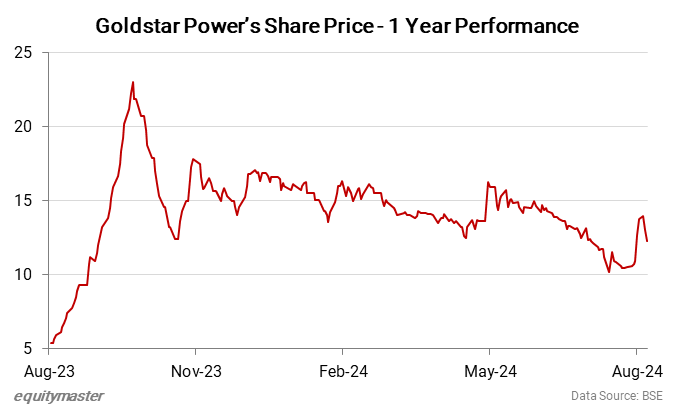
For more details, see the Goldstar Power company fact sheet and quarterly results.
#2 L&T
Next on the list is L&T.
Larsen & Toubro (L&T), a diversified Indian multinational conglomerate, has made notable advancements in the energy storage sector.
The company manages over 1.5 GWh of storage capacity in battery energy storage systems (BESS), earning it a reputation as a preferred EPC (Engineering, Procurement, and Construction) partner for developers worldwide.
L&T is actively involved in constructing energy storage facilities, including BESS and pumped hydro storage plants.
L&T offers comprehensive turnkey EPC solutions for energy storage projects, ensuring a holistic approach to project development.
The company has successfully executed several BESS projects across India, contributing to the growth of the nation's energy storage infrastructure.
A recent highlight in L&T's portfolio occurred on 24 June 2024, when its Power Transmission & Distribution (PT&D) business secured a substantial domestic order to build a Solar PV Plant in conjunction with a BESS. According to L&T's classification, the value of this significant order is estimated between Rs 10 billion (bn) and Rs 25 bn.
The project involves the construction of a grid-connected 185bMW Solar PV Plant, along with a BESS boasting a capacity of 254 MWh.
The BESS will store solar energy during periods of low demand and discharge it during peak demand times.
Additionally, it will help smooth out fluctuations in energy generation, provide frequency regulation, and offer voltage support. The system also features black start capability, which allows for quick re-energisation of the grid following an outage.
Going forward, the company plans to expand its global energy storage portfolio by increasing its presence in the international market.
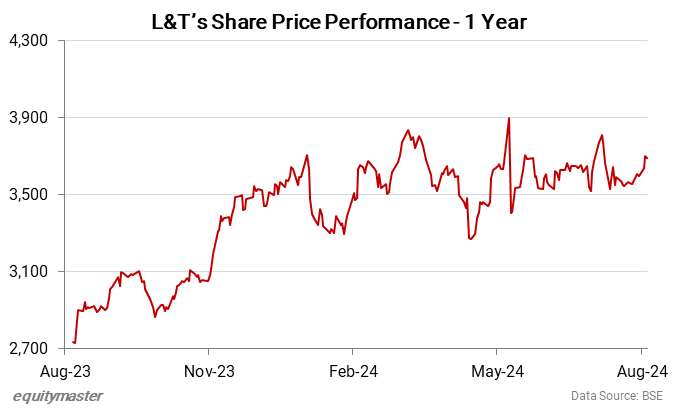
For more details, see the L&T company fact sheet and quarterly results.
#3 Power Grid Corporation of India
Next on the list is Power Grid Corporation of India.
As the backbone of the country's power grid, PGCIL plays a crucial role in ensuring the reliable and efficient delivery of electricity.
The company is responsible for integrating energy storage systems with the national grid. This involves developing the necessary infrastructure, such as transmission lines and substations, to connect energy storage facilities to the grid.
PGCIL works closely with the government and regulatory bodies to develop policies and guidelines related to energy storage. This includes setting standards for energy storage systems, promoting their adoption, and addressing regulatory challenges.
The company has been involved in several pilot projects to test the feasibility and benefits of energy storage systems in the Indian context. These projects have helped to gain valuable insights into the performance and integration of energy storage technologies.
PGCIL has also been actively involved in the installation and operation of BESS projects, which help improve grid stability, manage peak demand, and integrate renewable energy sources.
Additionally, the company has explored pumped hydro storage projects, where energy is stored by pumping water uphill and then releasing it to generate electricity during peak demand periods.
On 26 April 2024, the company announced that it had secured three inter-state transmission projects under tariff-based competitive bidding.
These projects are designed to evacuate power from renewable energy projects in Rajasthan and Gujarat.
The first project, the transmission system for evacuation of power from Rajasthan (Jaisalmer/Barmer Complex), includes the establishment of a new 765/400/220 kV pooling substation at Mandsaur, a 765kV D/C Transmission Line, and the extension of associated bays at an existing substation in Madhya Pradesh.
The second project at Khavda in Gujarat focuses on augmentation works at an existing substation in the state, facilitating the integration of renewable energy from this region into the grid.
Meanwhile, the third project in Rajasthan includes the establishment of a new 765 kV substation at Rishabhdeo, 765kV D/C transmission lines, and the extension of associated bays at other substations in Rajasthan and Madhya Pradesh.
While these projects are primarily focused on enhancing transmission infrastructure, they are closely linked to energy storage. By facilitating the integration of renewable energy into the grid, these projects set the stage for the deployment of energy storage systems.
Such systems can store excess energy generated from renewables during low-demand periods and discharge it during peak times, thereby stabilizing the grid and ensuring a more reliable power supply.
Going forward, PGCIL aims to develop and implement large-scale grid-scale energy storage projects to enhance grid stability and integrate renewable energy sources more effectively.
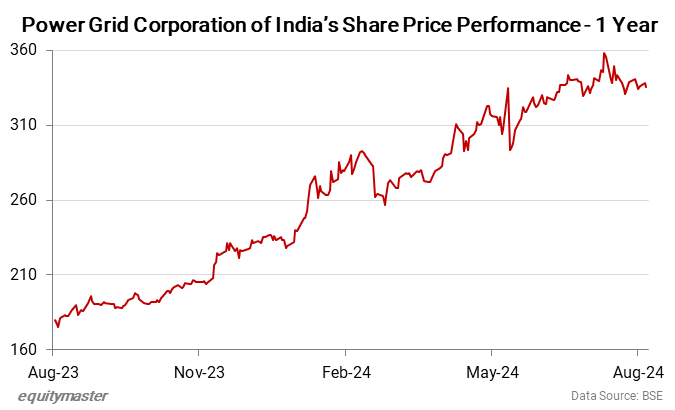
For more details, see the Power Grid company fact sheet and quarterly results.
#4 ABB India
Next on the list is ABB India.
ABB India is a leading provider of energy storage solutions in the country. As a global technology leader, ABB offers a comprehensive range of products, systems, and services to support the growing demand for energy storage in India.
ABB provides advanced BESS solutions, including lithium-ion batteries, inverters, and control systems.
These systems are ideal for applications such as peak shaving, frequency regulation, and renewable energy integration.
ABB's energy storage solutions are designed to seamlessly integrate with the grid, enhancing its stability and reliability. The company offers advanced grid control and management systems to optimise the performance of energy storage facilities.
The company supports the development of micro grids, which are localised power systems that can operate independently or in conjunction with the main grid. Energy storage plays a crucial role in enabling microgrids to function effectively, especially in remote areas.
ABB offers a range of services related to energy storage, including project development, engineering, installation, maintenance, and operations and maintenance (O&M).
The company has contributed to grid modernisation initiatives by deploying energy storage systems to enhance grid stability and resilience.
ABB India's impact on the renewable energy sector is further underscored by its recent achievement on 21 August 2024 of surpassing a 10-gigawatt (GW) milestone in delivering automation solutions for renewable energy plants across India.
Starting with a 100-MW project about seven years ago, ABB has expanded its footprint in the renewable energy industry, contributing to over 300 projects utilizing ABB's IoT-based Programmable Logic Controller (PLC) solution.
These automation solutions are crucial for optimizing the performance of renewable energy plants, including solar, wind, and BESS.
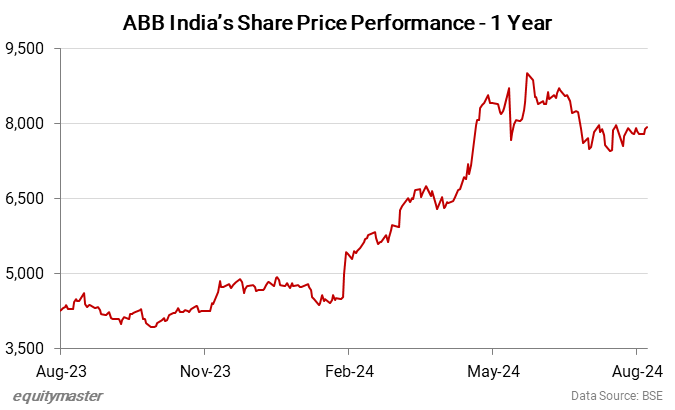
For more details, see the ABB India company fact sheet and quarterly results.
#5 Tata Power
Last on our list is Tata Power.
As a prominent member of the Tata Group, Tata Power is making significant strides in the energy storage sector.
The company's subsidiary, Tata Power Solar Systems, achieved a notable milestone on 12 March 2024 by commissioning India's largest solar and BESS project at Rajnandgaon in Chhattisgarh. This ambitious project combines a 100 MW solar photovoltaic (PV) installation with a 120 MWh utility-scale BESS.
Tata Power Solar Systems, which is a wholly-owned subsidiary of Tata Power Renewable Energy (itself a subsidiary of Tata Power), was awarded this Rs 9.5 bn project on an engineering, procurement, and construction (EPC) basis by the Solar Energy Corporation of India (SECI) in December 2021.
The project scope encompassed engineering, design, supply, construction, erection, testing, operations and maintenance (O&M), and commissioning.
It is expected to generate approximately 243.53 m units of energy annually and reduce carbon dioxide emissions by 4.87 m tonnes over 25 years.
In addition to this project, Tata Power Renewable Energy Ltd (TPREL), another arm of Tata Power, signed a power purchase agreement (PPA) with SJVN in May 2024 for a 460 MW firm and dispatchable renewable energy (FDRE) project.
To meet this requirement, TPREL will develop a hybrid renewable energy plant that integrates solar, wind, and battery storage components.
Furthermore, Tata Power is exploring the development of pumped hydro storage projects, with plans to achieve a 2,800 MW capacity by 2028-29.
This initiative represents an investment of Rs 150 bn, aimed at enhancing grid stability and supporting the integration of renewable energy.
Looking ahead, Tata Power is focused on increasing its market share in the energy storage space, continuing to leverage its expertise to drive innovation and sustainability in India's energy sector.
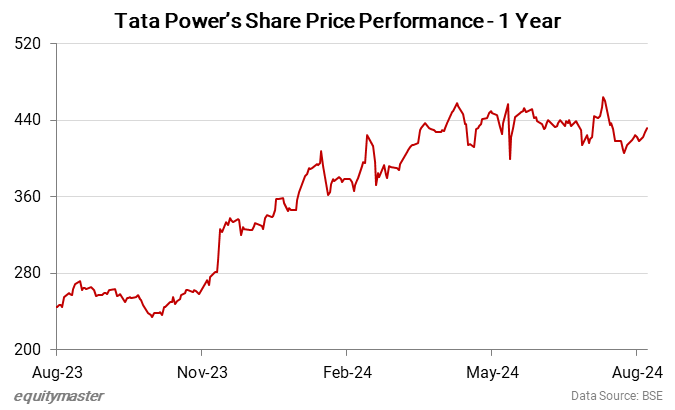
For more details, see the Tata Power company fact sheet and quarterly results.
Snapshot of Top Energy Storage Stocks in India
Here's a quick view of top energy storage companies in India from Equitymaster's stock screener.
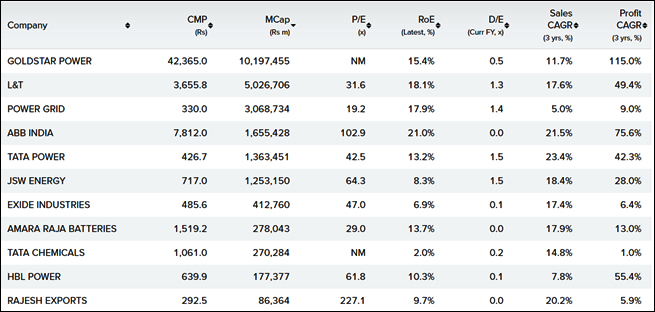
Please note that these parameters can be changed according to your selection criteria.
Conclusion
The battery energy storage system market in India is seeing increased activity from various firms, particularly in the lithium-ion battery segment.
These enterprises are taking advantage of the high demand for these batteries in renewable power projects, with many industry experts believing that the growth of renewables in India is incomplete without energy storage systems.
Lithium batteries offer the most cost-effective integration. Several corporations have planned solar plus energy storage projects to ensure a continuous power supply to the grid.
Government initiatives are also expected to drive the market, creating opportunities for businesses in this sector.
These measures are aimed at boosting the sector by including various thermal and renewable projects.
With the installed battery energy storage capacity expected to increase significantly, several projects have been planned to integrate energy storage systems into renewable power projects by the Indian government and affiliated entities.
However, it's essential to conduct thorough research before making any investment decisions. Factors such as technological advancements, government policies, market competition, and project-specific risks should be carefully evaluated.
To know what's moving the Indian stock markets today, check out the most recent share market updates here.
--- Advertisement ---
Investment in securities market are subject to market risks. Read all the related documents carefully before investing
Which businesses are most likely to emerge stronger over the next 3 to 5 years?
After screening thousands of listed companies, comparing industries, and examining balance sheets...
Our research team discovered some of the strongest opportunities in what we call... Essential Stocks.
Opportunities like this do not remain hidden forever.
Disclaimer: This article is for information purposes only. It is not a stock recommendation and should not be treated as such. Learn more about our recommendation services here...
ABOUT EQUITYMASTER
Since 1996, Equitymaster has been the source for honest and credible opinions on investing in India. With solid research and in-depth analysis Equitymaster is dedicated towards making its readers- smarter, more confident and richer every day. Here's why hundreds of thousands of readers spread across more than 70 countries Trust Equitymaster.
PREMIUM PRODUCTS
- Hidden Treasure
- Forever Stocks
- Big Wave Profits
- Equitymaster Venture
- Microcap Millionaires
- Momentum Profits
- Double Income
- Midcap Value Alert
- Exponential Profits
- Annual Breakout Alert
- Lazy Millionaire
- Phase One Alert
- Smallcap AlphaQuest
- InsiderPro Stocks
- StockSelect
- Private Briefing
- Active Wealth Multiplier 2030
- FundSelect
- Fund Advantage
QUICK LINKS
POPULAR TOPICS
- Multibagger Penny Stocks
- Basics of Value Investing
- Benjamin Graham
- How to Invest in Gold
- How to Invest in Silver
- Best Stocks to Buy Today
- Best Small-cap Stocks to Buy
- Best Bluechip Stocks to Buy
- Guide to Penny Stocks
- How to Invest in the Share Market
- Warren Buffett - The Value Investor
- Pick the Best Multibagger Stocks
TRENDING TOPICS
- Best Defence Stocks in India
- Upcoming Dividend Stocks
- Best Semiconductor Stocks in India
- Data Center Stocks in India
- Best Railway Stocks in India
- Best Solar Stocks in India
- Fastest Growing Stocks in India
- List of BSE Sensex 30 Stocks
- Adani Group Shares
- Stocks Recently Bought by FIIs in India
- Top Value Stocks in India


LEGAL DISCLAIMER:
Investment in securities market are subject to market risks. Read all the related documents carefully before investing.
Registration granted by SEBI, enlistment with BSE as IA and RA, and certification from NISM in no way guarantee performance of the intermediary or provide any assurance of returns to investors.
All rights reserved. Any act of copying, reproducing or distributing any content from this website whether wholly or in part, for any purpose without the permission of Quantum Information Services Private Limited is strictly prohibited and shall be deemed to be copyright infringement.
Quantum Information Services Private Limited (QIS) is a SEBI registered Research Analyst (bearing registration no INH000021128) and Investment Adviser(Reg. No: INA000000680). Consequent upon the merger of Equitymaster Research Private Limited into QIS, effective October 30, 2025 QIS owns and operates brand 'Equitymaster' and website www.equitymaster.com. This does not constitute or is not intended to constitute an offer to buy or sell, or a solicitation to an offer to buy or sell financial products, units or securities and QIS including its employees, personnel, directors, associates will not be liable for any losses (direct or indirect) incurred or investment(s) made or decisions taken/or not taken based on the information provided herein. All content and information is provided on an 'As Is' basis by QIS. Information herein is believed to be reliable but QIS does not warrant its completeness or accuracy and expressly disclaims all warranties and conditions of any kind, whether express or implied. The services rendered by QIS are on a best effort basis. QIS does not assure or guarantee the user any minimum or fixed returns. The securities quoted, if any are for illustration only and are not recommendatory. Use of this information is at the user's own risk. The user must make his own investment decisions based on his specific investment objective and financial position and using such independent advisors as he believes necessary. This is not directed for access or use by anyone in a country, especially, USA, Canada or the European Union countries, where such use or access is unlawful or which may subject QIS or its affiliates to any registration or licensing requirement.
The performance data quoted represents past performance and does not guarantee future results. As a condition to accessing QIS's content and website, you agree to our Terms and Conditions of Use, available here
Equitymaster requests your view! Post a comment on "Top 5 Energy Storage Stocks to Add to Your Watchlist". Click here!
Comments are moderated by Equitymaster, in accordance with the Terms of Use, and may not appear
on this article until they have been reviewed and deemed appropriate for posting.
In the meantime, you may want to share this article with your friends!