


Equitymaster's 2026 Grand Festive Offer
Two Research Reports, Six Stocks
3 Small Cap, 3 Large Cap
**Important: We hate spam as much as you do. Check out our Privacy Policy and Terms Of Use.
7 Stocks to Watch for the Upcoming Festive Season
 Image source: DeepakSethi/www.istockphoto.com
The September to December stretch is when India's consumption engine hits top gear.
Navratri, Diwali, Dussehra, Christmas and the long wedding calendar together make Q2 and Q3 the strongest quarters for many consumer-facing companies.
For retailers, hoteliers, jewellers and even two-wheeler makers, this is when earnings often see their sharpest lift.
This four-month period contributes a disproportionate share of annual sales across discretionary categories such as jewellery, apparel, travel, and hospitality.
Weddings, which cluster around this season, only add to the spending surge. The average Indian wedding alone costs more than three times a household's annual income, which only shows how festivals and celebrations together create powerful demand tailwinds.
The demand pipeline looks solid, with India's youth driving festive spending. Companies across jewellery, textiles, hotels and mobility are tapping into this opportunity.
For investors, the festive season is an important theme. Companies with strong brands and wide distribution are best placed to ride it.
Here are 7 stocks to watch this season.
#1 Raymond
First on our list is Raymond.
Raymond is a household name in men's fashion and fabrics. Its iconic suiting and shirting brands dominate the premium textile market, with over 60% share in suiting and a strong presence in branded fabrics.
The company is also scaling Ethnix, its Indian celebration wear brand, to tap into the growing demand for wedding and festive clothing.
The company runs a large multi-brand retail network across formats. As of June 2025, it operated 1,675 stores, up from 1,540 a year ago, though it continues to prune underperformers to keep the footprint efficient.
Ethnix alone has 140 outlets, offering fusion silhouettes, kurtas and wedding collections positioned directly for festive occasions.
In FY25, Raymond Lifestyle reported revenue growth of 10% year-on-year (YoY), with EBITDA margin improving to 8.6% from 7.8% in FY24, helped by better mix and cost efficiencies.
In Q1 FY26, revenue grew 18% YoY, led by branded textiles and apparel. EBITDA margin expanded to 8.2% from 7.1% last year, reflecting control over costs and an improved product mix.
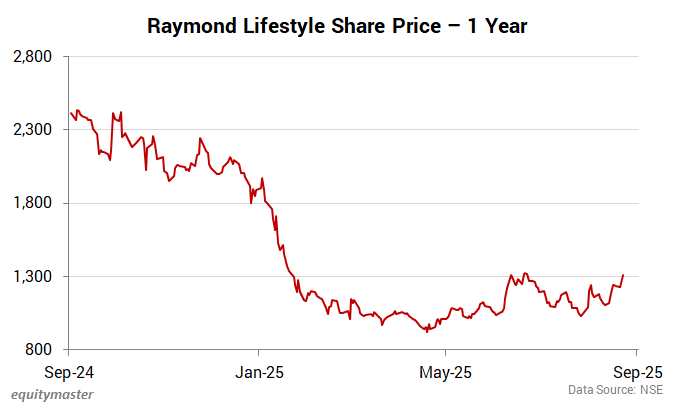
Looking ahead, Raymond is betting on Ethnix and its premium textile launches like the Chairman's Collection and AI-inspired Linear Legacy to strengthen brand pull.
The company sees the India-UK free trade agreement as a big export opportunity in garments, though near-term global trade volatility remains a risk.
Domestically, festive demand and dealer restocking are expected to lift sales in the coming quarters.
To know more about the company, check out its financial factsheet and latest quarterly results.
#2 Vedant Fashions
Next on the list is Vedant Fashions.
Vedant Fashions is India's celebration wear leader. Its flagship brand Manyavar dominates the groom's market, while Mohey has emerged as the go-to for lehengas and sarees. Together, these brands are the company's core festive offerings.
The company follows an asset-light, franchisee model, backed by a wide retail network. As of June 2025, it had 684 exclusive outlets across 256 cities with nearly 1.8 m sq. ft. of retail space. This strong distribution gives it a front-row seat to festive spending.
In FY25, Vedant Fashions reported a modest revenue growth of 1.4% over the previous year. EBITDA margin slipped to 46.6% from 48.6% in FY24, reflecting higher marketing spends and investments in brand building.
In Q1 FY26, revenue grew 17% YoY, retail sales rose 23% and same-store sales were up nearly 18%. EBITDA margin eased to 43.2% from 47.8% a year ago.
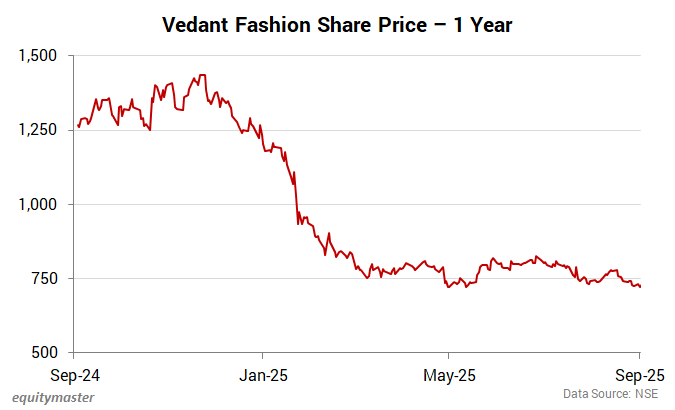
Going forward, the management is focussing on larger flagship stores, normalized marketing spends, and scaling Mohey's broader wedding wear positioning.
The company is also seeding emerging labels like Twamev and Diwas, but Manyavar and Mohey remain the key drivers for the season ahead.
For investors, this mix of powerful brands, high margins and debt-free balance sheet makes Vedant Fashions one of the top festive-season stocks to watch.
To know more about the company, check out its financial factsheet and latest quarterly results.
#3 Titan
Third on our list is Titan.
Titan is India's leading branded jewellery retailer.
Its flagship brand Tanishq dominates the wedding jewellery market, while Mia has emerged as the go-to for everyday diamond wear. CaratLane is growing fast in the omni-channel and gifting space, while Zoya caters to luxury.
The company has built a strong distribution network through exclusive brand outlets and multi-channel presence, giving it a wide reach across metros and tier 2 and 3 towns.
In FY25, Titan reported revenue growth of 21% YoY. Jewellery segment same-store sales grew around 14% for the year. EBIT margin in the jewellery business stood at 12.1%, compared to 12.4% in FY24, reflecting higher gold prices and increased marketing spends.
In Q1 FY26 revenue grew in the mid-teens on a YoY basis, with jewellery retail sales continuing to post double-digit growth. Same-store sales in jewellery rose 11% in the quarter.
EBIT margin in the jewellery business was broadly stable versus last year, supported by studded activations and operating leverage.
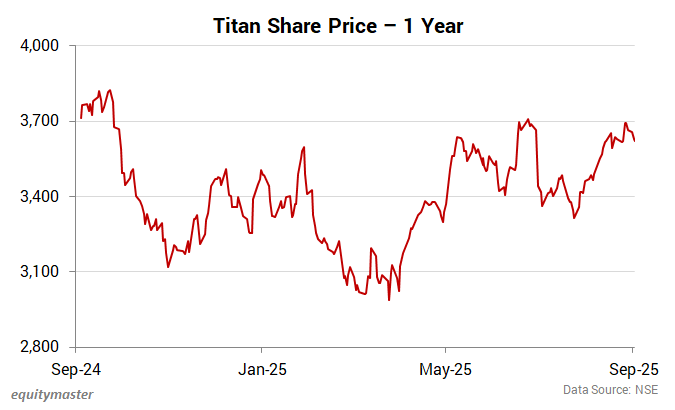
Going forward, the management aims to scale CaratLane, expanding Mia's everyday diamond positioning and driving premiumization within Tanishq. Marketing spends have been stepped up ahead of the wedding season to support demand.
To know more about the company, check out its financial factsheet and latest quarterly results.
#4 Kalyan Jewellers
Fourth on our list is Kalyan Jewellers.
Kalyan Jewellers is one of India's largest jewellery retailers. Its 'Kalyan' brand dominates wedding jewellery. Candere, its omni-channel format, targets lightweight diamond and lifestyle jewellery.
All of which give Kalyan a strong festive-season connect, from big-ticket wedding purchases to younger, design-conscious buyers.
The company has built a deep-rooted distribution network. As of March 2025, it had 388 showrooms worldwide, including 278 Kalyan stores in India, 73 Candere outlets, 36 in the Middle East and its first showroom in the US.
Its "My Kalyan" grassroots network of over 1,000 centres adds to its hyperlocal presence, making it one of the most accessible jewellers in the country.
In FY25, Kalyan reported a consolidated revenue growth of 35% YoY. EBITDA margin stood at 6.1% versus 6.3% in FY24, reflecting higher gold price volatility and marketing spends.
Same-store sales growth for India was in the mid-to-high single digits, supported by strong traction in studded jewellery.
In the June quarter revenue grew 31% YoY, driven by 31% growth in India operations and steady momentum in the Middle East.
EBITDA margin expanded on the back of higher studded share, improved procurement efficiencies, and operating leverage.
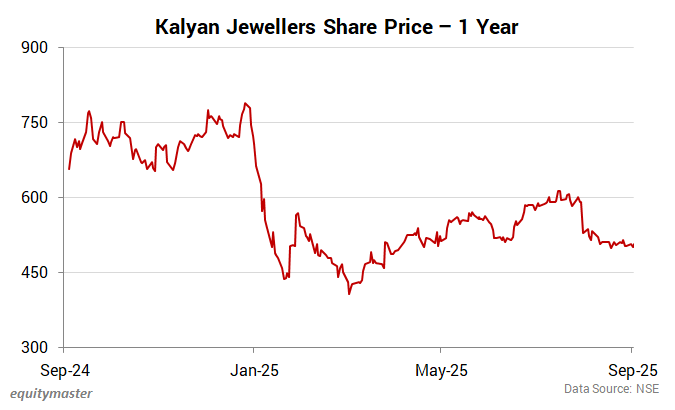
Looking ahead, the company is focused on a four-brand architecture. This includes Kalyan, Candere and a soon-to-be-launched regional brand, to address diverse consumer segments.
Expansion will continue through the capital-light FOCO (franchise-owned, company-operated) model, with 170 new stores planned in FY26, including 80 under Candere.
The management is also working on improving margins through procurement efficiencies and a sharper product mix.
To know more about the company, check out its financial factsheet and latest quarterly results.
Bottom of Form
#5 Metro Brands
Fifth on our list is Metro Brands.
Metro Brands is one of India's largest specialty footwear retailers.
Its portfolio includes in-house banners like Metro, Mochi, and Walkway, along with exclusive tie-ups for global names such as Crocs, FILA, FitFlop, Foot Locker, New Era and, most recently, Clarks.
This wide product portfolio, from formalwear and party shoes to athleisure and casuals, ensures relevance across festive occasions.
The company has built a wide distribution network. As of June 2025, Metro operated 928 stores across 206 cities in 31 states and UTs, supported by an omni-channel platform that contributed 13.7% of revenue in Q1 FY26.
In FY25, Metro reported a 6.4% YoY revenue growth, with EBITDA margin of 30.3%. Q1 FY26 showed steady festive build-up: revenue grew 9% YoY, with EBITDA margin of 31%. Gross margins remained strong near 60%, though higher marketing spends trimmed operating leverage.
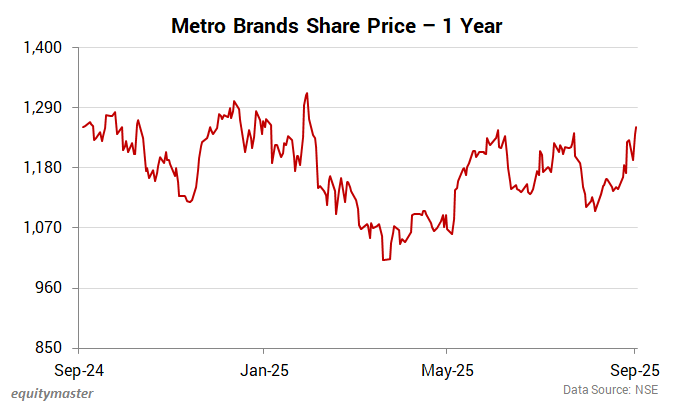
Premiumization continues to be a structural driver for the company. Products priced above Rs 3,000 contributed 54% of sales in FY25, up from 50% the year before.
In-house brands made up 72% of sales at multi-brand outlets in Q1 FY26, underscoring the strength of proprietary labels alongside global tie-ups.
Festive relevance is also supported by partnerships with global icons. The launch of India's first Foot Locker store and kiosks for New Era added to Metro's youth and sneaker culture positioning, while the June 2025 Clarks deal enhances its play in comfort footwear.
To know more about the company, check out its financial factsheet and latest quarterly results.
#6 Hero MotoCorp
Sixth on our list is Hero MotoCorp.
Hero MotoCorp is the world's largest two-wheeler maker, with brands like Splendor, HF Deluxe and Glamour dominating the commuter segment, while Xtreme and Xpulse cater to the premium side.
Its electric arm, VIDA, is also steadily expanding its presence.
Hero tends to do well during the festive season, especially in rural and semi-urban markets where weddings often trigger big-ticket purchases of motorcycles and scooters.
The company has an expansive distribution reach with over 11,000 touchpoints worldwide, including a fast-growing Premia retail network that had 80+ stores by FY25-end.
In FY25, Hero reported a revenue increase of 8.8% YoY. EBITDA margin improved to 14.4% from 14.0% in FY24, aided by better product mix, cost savings and premiumisation, though offset by investments in EVs.
Same-store sales (retail registrations) rose in the mid-single digits, with rural outperforming in the early part of the year.
In Q1 FY26 revenue grew 6% YoY, driven by recovery in market share to 30.9%. EBITDA margin for the non-EV business expanded to 16.8% from 16.1% last year, while consolidated margin was flat at 14.4% due to EV investments.
Retail sales showed steady momentum, with SSSG trending in the high single digits across key commuter brands.
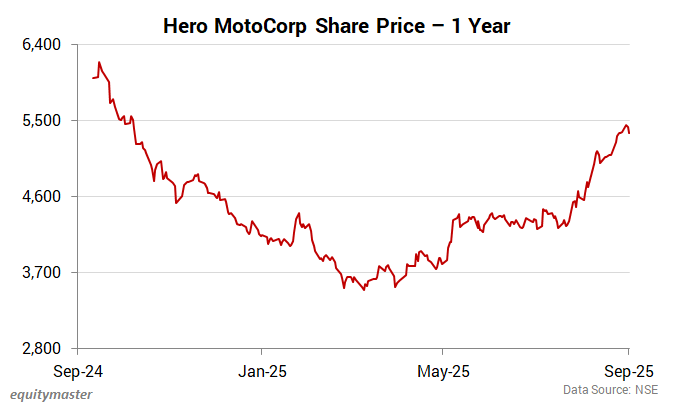
Looking ahead, the management is betting on strengthening the entry segment with HF Deluxe Pro, scaling up the premium range with Xtreme and Harley tie-ups, and expanding VIDA's electric portfolio with the new VX2.
Marketing spends have been stepped up ahead of the wedding season to support demand across urban and rural markets.
To know more about the company, check out its financial factsheet and latest quarterly results.
#7 Welspun Living
Last on our list is Welspun Living.
Welspun Living is a global leader in home textiles and one of India's biggest branded names in the category. Through brands like Welspun, Spaces, and Christy, the company caters to festive and wedding season demand with products that cover gifting, premium furnishings, and luxury linens.
The company has built a vertically integrated and globally diversified business. It remains the leading towel and sheet supplier to the US market while steadily growing its domestic footprint with 48 exclusive outlets and a wider distribution reach across India.
In FY25, Welspun Living reported a revenue decline of 5.6% YoY, reflecting weakness in global export demand. EBITDA margin slipped to 12.4% from 14.2% in FY24, impacted by softer volumes in the export business.
The domestic business, however, grew in double digits, supported by strong brand traction and retail expansion. Same-store sales for its domestic segment were in the high single digits for the year.
Q1 FY26 saw pressure from tariff-related uncertainties in global markets. Revenue declined 11.6% YoY. EBITDA margin eased to 11.1% from 15.2% a year ago.
On the brighter side, domestic consumer business grew 9.5% YoY, with the Welspun brand up 15% and retail sales showing steady same-store growth.
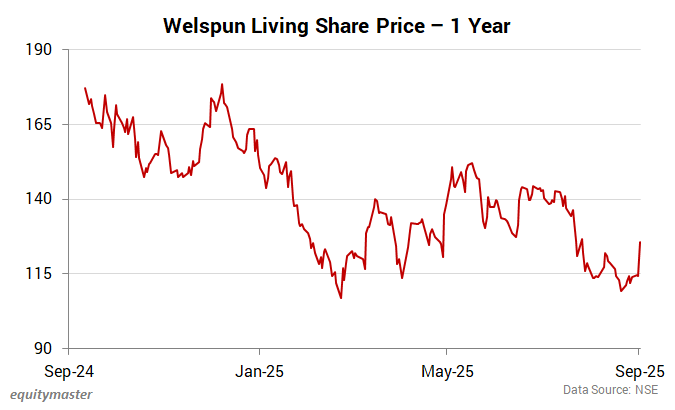
In the future, the management is focussing on geographic diversification, scaling domestic retail, and expanding into new categories like pillows and flooring.
Recent investments in a new pillow plant in Nevada, US, and continued growth in emerging businesses like flooring and advanced textiles are expected to add momentum.
To know more about the company, check out its financial factsheet and latest quarterly results.
Conclusion
The festive and wedding calendar may well deliver a demand surge across jewellery, apparel, hospitality, and two-wheelers.
But investors cannot afford to treat seasonal tailwinds as a substitute for fundamentals. A good Q2 or Q3 does not guarantee sustainable growth.
In markets where valuations remain rich, it is easy to confuse short-term price action with long-term business strength.
High sales during weddings or festivals need to translate into consistent cash flows, disciplined expansion, and healthy balance sheets. Not every company that does well during the festive season will reward shareholders over time.
Selectivity matters. Focus on companies with brand strength, operating efficiency, and governance standards that endure beyond one quarter. Keep an eye on margins and return ratios, not just topline growth. And always insist on a margin of safety in valuations.
--- Advertisement ---
Investment in securities market are subject to market risks. Read all the related documents carefully before investing
Which businesses are most likely to emerge stronger over the next 3 to 5 years?
After screening thousands of listed companies, comparing industries, and examining balance sheets...
Our research team discovered some of the strongest opportunities in what we call... Essential Stocks.
Opportunities like this do not remain hidden forever.
Disclaimer: This article is for information purposes only. It is not a stock recommendation and should not be treated as such. Learn more about our recommendation services here...
ABOUT EQUITYMASTER
Since 1996, Equitymaster has been the source for honest and credible opinions on investing in India. With solid research and in-depth analysis Equitymaster is dedicated towards making its readers- smarter, more confident and richer every day. Here's why hundreds of thousands of readers spread across more than 70 countries Trust Equitymaster.
PREMIUM PRODUCTS
- Hidden Treasure
- Forever Stocks
- Big Wave Profits
- Equitymaster Venture
- Microcap Millionaires
- Momentum Profits
- Double Income
- Midcap Value Alert
- Exponential Profits
- Annual Breakout Alert
- Lazy Millionaire
- Phase One Alert
- Smallcap AlphaQuest
- InsiderPro Stocks
- StockSelect
- Private Briefing
- Active Wealth Multiplier 2030
- FundSelect
- Fund Advantage
QUICK LINKS
POPULAR TOPICS
- Multibagger Penny Stocks
- Basics of Value Investing
- Benjamin Graham
- How to Invest in Gold
- How to Invest in Silver
- Best Stocks to Buy Today
- Best Small-cap Stocks to Buy
- Best Bluechip Stocks to Buy
- Guide to Penny Stocks
- How to Invest in the Share Market
- Warren Buffett - The Value Investor
- Pick the Best Multibagger Stocks
TRENDING TOPICS
- Best Defence Stocks in India
- Upcoming Dividend Stocks
- Best Semiconductor Stocks in India
- Data Center Stocks in India
- Best Railway Stocks in India
- Best Solar Stocks in India
- Fastest Growing Stocks in India
- List of BSE Sensex 30 Stocks
- Adani Group Shares
- Stocks Recently Bought by FIIs in India
- Top Value Stocks in India


LEGAL DISCLAIMER:
Investment in securities market are subject to market risks. Read all the related documents carefully before investing.
Registration granted by SEBI, enlistment with BSE as IA and RA, and certification from NISM in no way guarantee performance of the intermediary or provide any assurance of returns to investors.
All rights reserved. Any act of copying, reproducing or distributing any content from this website whether wholly or in part, for any purpose without the permission of Quantum Information Services Private Limited is strictly prohibited and shall be deemed to be copyright infringement.
Quantum Information Services Private Limited (QIS) is a SEBI registered Research Analyst (bearing registration no INH000021128) and Investment Adviser(Reg. No: INA000000680). Consequent upon the merger of Equitymaster Research Private Limited into QIS, effective October 30, 2025 QIS owns and operates brand 'Equitymaster' and website www.equitymaster.com. This does not constitute or is not intended to constitute an offer to buy or sell, or a solicitation to an offer to buy or sell financial products, units or securities and QIS including its employees, personnel, directors, associates will not be liable for any losses (direct or indirect) incurred or investment(s) made or decisions taken/or not taken based on the information provided herein. All content and information is provided on an 'As Is' basis by QIS. Information herein is believed to be reliable but QIS does not warrant its completeness or accuracy and expressly disclaims all warranties and conditions of any kind, whether express or implied. The services rendered by QIS are on a best effort basis. QIS does not assure or guarantee the user any minimum or fixed returns. The securities quoted, if any are for illustration only and are not recommendatory. Use of this information is at the user's own risk. The user must make his own investment decisions based on his specific investment objective and financial position and using such independent advisors as he believes necessary. This is not directed for access or use by anyone in a country, especially, USA, Canada or the European Union countries, where such use or access is unlawful or which may subject QIS or its affiliates to any registration or licensing requirement.
The performance data quoted represents past performance and does not guarantee future results. As a condition to accessing QIS's content and website, you agree to our Terms and Conditions of Use, available here
Equitymaster requests your view! Post a comment on "7 Stocks to Watch for the Upcoming Festive Season". Click here!
Comments are moderated by Equitymaster, in accordance with the Terms of Use, and may not appear
on this article until they have been reviewed and deemed appropriate for posting.
In the meantime, you may want to share this article with your friends!