

Investment in securities market are subject to market risks. Read all the related documents carefully before investing
Somewhere in India Today,
Ordinary-Looking Businesses Could Become
10...Perhaps Even 20 Times Larger
Over the Next Decade.
DISCOVER RICHA'S 3 YOUNG TITANS
**Important: We hate spam as much as you do. Check out our Privacy Policy and Terms Of Use.
This Multibagger Defence Stock Could Get Maharatna Status Soon
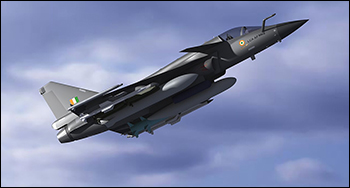 Image source: Wikimedia and DRDO, India
When we talk about the largest and most influential companies in India, we're often referring to Maharatna companies. These are leading enterprises, closely associated with the national government.
Maharatna companies include different kinds of government-owned businesses, like public sector banks, central public sector enterprises, and state-level public enterprises.
These are like the crown jewels of India's business world, playing a crucial role in the country's economy and development.
Imagine you're playing a business game, and some players get special powers. That's what Maharatna's status is like in the real world of Indian business. These companies, also known as Public Sector Undertakings (PSUs), are the elite among government-owned enterprises.
The term "Maharatna," meaning "big gem" in Hindi, aptly describes their significance. They are the most powerful and prestigious PSUs, enjoying a higher degree of autonomy and financial flexibility compared to their counterparts.
Now, in a major upgrade, Hindustan Aeronautics Limited (HAL), a multibagger Defence PSU, is set to be promoted from Navratna to the prestigious Maharatna status by the government.
About HAL
Hindustan Aeronautics Limited (HAL), one of India's premier public sector undertakings (PSUs), stands on the verge of being elevated to the "Maharatna" status.
HAL is the undisputed king of Indian defence aviation. It's the premier aircraft manufacturer in the country. This PSU's market position is so dominant that its competitors are either non-existent or very far behind.
It's the only company in India that can build fighter jets and helicopters for the Indian armed forces.
Established on 23 December 1940, HAL is one of the oldest and largest aerospace and defence manufacturers in the world.
The company develops, designs, manufactures, and supplies aircraft, helicopters, drones, avionics, and communications equipment for military and civil markets. It also builds certain components of the PSLV rocket for ISRO.
Its aircraft product line includes the Tejas light combat aircraft, Hawk advanced jet trainer, Su-30 MKI, HJT-36 intermediate jet trainer, Dornier DO-228 multi-purpose light transport aircraft, and the HTT-40 basic flight trainer.
It has also produced helicopters line the Chetak, Cheetah the indigenous advanced light helicopter, Dhruv along with its many variants for the army, navy, air force, and coast guard.
Apart from this, one of the company's main lines of business is the maintenance, upgrade and overhaul of various aircraft. This includes changes like avionics upgrades integrating new weapon systems, software upgrades, etc.
What Does Maharatna Status Mean for HAL?
The "Maharatna" designation is one of the highest recognitions that a state-owned company can achieve in India.
It brings with it enhanced financial autonomy and operational freedom, allowing companies to make strategic decisions independently.
The last company to receive this coveted status was Oil India, which was elevated to a "Maharatna" in August 2023.
Currently, India boasts 13 "Maharatna" PSUs, including major names like Bharat Heavy Electricals Limited, Bharat Petroleum Corporation, Coal India, GAIL, Hindustan Petroleum, Indian Oil, NTPC, ONGC, Power Grid, Steel Authority of India, Oil India, REC, and PFC.
The elevation to "Maharatna" status would unlock several opportunities for HAL.
- Increased Investment Capabilities: HAL will be able to invest up to 15% of its net worth in new projects without needing prior government approval, unlocking major growth opportunities.
- Global Expansion: The company will have the authority to make foreign investments of up to Rs 50 billion (bn) independently, enabling it to pursue international partnerships and expand its global footprint.
- Mergers & Acquisitions: With greater financial flexibility, HAL can engage in mergers and acquisitions, both domestically and internationally, strengthening its market position.
- Access to Competitive Financing: The Maharatna tag will allow HAL access to better financing options, which will fuel its efforts to innovate and enhance its production capabilities in the high-tech aerospace sector.
As India prioritises defence modernisation and pushes for self-reliance in defence manufacturing, HAL's Maharatna status will further empower the company to drive technological advancements and scale up production.
This elevation marks a crucial step in HAL's journey as it continues to be a cornerstone of India's aerospace and defence sector.
HAL's Defence Breakthroughs
Recently, the Ministry of Defence (MoD) has awarded Hindustan Aeronautics Limited (HAL) a major contract to manufacture 240 AL-31FP Aero Engines for Su-30MKI aircraft, valued at over Rs 260 bn.
This significant contract is a key step towards achieving self-reliance (Aatmanirbhar Bharat) in the defence sector.
The engines will be produced at HAL's Koraput Division, aiming to support the Indian Air Force's operational needs for its Su-30 fleet.
HAL intends to increase the indigenisation content of these aero-engines to up to 63%, enhancing the local content of their repair and overhaul processes.
In addition to this, the Defence Acquisition Council (DAC) has approved 10 capital acquisition proposals totalling Rs 1.5 trillion (tn).
These include the procurement of Future Ready Combat Vehicles, Air Defence Fire Control Radars, Dornier 228 aircraft, and Next Generation Fast Patrol & Offshore Patrol Vessels.
Most of the funding for these projects will be sourced domestically, underscoring India's commitment to self-reliance in defence manufacturing.
Moreover, HAL has partnered with SAFHAL Helicopter Engines Pvt Ltd to jointly design, develop, manufacture, and support a new-generation high-power engine named 'Aravalli'.
This engine will power the 13-ton Medium Lift class Indian Multi-Role Helicopter (IMRH) and the Deck-Based Multi-Role Helicopter (DBMRH).
The company's order book as of 31 March 2024, was Rs 940 bn. With the addition of a new order worth Rs 260 bn, the total order book now stands at Rs 1,200 bn.
A Close Look at Financials
For the June 2024 quarter, HAL reported an 11% (YoY) increase in revenue, reaching Rs 43.5 bn compared to Rs 39.2 bn in the same period last year.
During this quarter, net profit surged by 77%, rising to Rs 14.4 bn from Rs 8.1 bn a year earlier.
HAL has demonstrated a robust growth trajectory over the three years from FY22 to FY24.
The company's net sales increased from Rs 246.2 bn in FY22 to Rs 303.8 bn in FY24, a compound annual growth rate (CAGR) of 15.2%.
This growth was driven by higher demand for HAL's aerospace and defence products, which includes significant contracts, and projects.
HAL's operating profit has shown substantial improvement, rising from Rs 64 bn in FY22 to Rs 116.4 bn in FY24.
This represents a CAGR of around 31.9%, indicating efficient cost management and operational improvements.
The net profit of HAL has also seen a strong upward trend, growing from Rs 50.8 bn in FY22 to Rs 76.2 bn in FY24, a CAGR of approximately 27.4%.
HAL Snapshot (FY22-24)
| (Rs m, Consolidated) | FY22 | FY23 | FY24 |
|---|---|---|---|
| Net Sales | 246,200.0 | 269,275.0 | 303,811.0 |
| Growth (%) | 7.6 | 9.4 | 12.8 |
| Operating Profit | 64,005.0 | 83,557.0 | 116,482.0 |
| Operating Profit Margin (%) | 0.3 | 0.3 | 0.4 |
| Net Profit | 50,799.0 | 58,277.0 | 76,210.0 |
| Net Profit Margin (%) | 20.6 | 21.6 | 25.1 |
Road Ahead
Hindustan Aeronautics Limited (HAL) is strategically pivoting towards the development of its own products, including advanced fighter aircraft and helicopters.
In February 2021, the Indian Air Force (IAF) placed an order for 83 Mk-1A fighters valued at Rs 480 bn.
Additionally, in April, the Defence Ministry issued a tender to HAL for the acquisition of 97 LCA Mk-1As, aimed at enhancing the IAF's capabilities amid a shortage of fighter squadrons. The new fighters are anticipated to cost around Rs 670 bn.
The first Mk-1A aircraft, part of the 2021 order, was initially scheduled for delivery by 31 March 2024. However, delays due to pending certifications have affected this timeline. HAL plans to deliver 16 Mk-1A fighters to the IAF in the financial year 2024-25.
To meet the growing demand, HAL has established a new production line in Nashik for the LCA Mk-1A, complementing the existing line in Bengaluru.
This expansion will enable HAL to increase its production capacity from 16 to 24 LCA Mk-1A jets annually, with the delivery of the 87 jets expected to be completed by 2028.
To support this ramp-up, HAL is also expanding its manufacturing facilities.
A new helicopter manufacturing facility is being set up in Tumkur.
Conclusion
In September 2024, the Defence Acquisition Council (DAC) approved a substantial Rs 1.4 trillion (tn) in proposals aimed at enhancing the operational capabilities of the Indian Armed Forces.
With 99% of these acquisitions to be sourced from domestic companies, HAL is well-positioned to benefit from this significant government investment.
HAL is expected to see gains from the government's procurement of Dornier-228 aircraft and other domestic contracts. The ongoing global emphasis on defence spending ensures a steady revenue stream for defence firms like HAL.
India's ambition to achieve a defence export target of Rs 350 bn by 2024-25 highlights its commitment to increasing indigenisation.
This drive includes phased import bans on weapons, a dedicated budget for locally manufactured military hardware, raising foreign direct investment limits from 49% to 74%, and streamlining business processes.
With a projected turnover of Rs 1.8 trillion in defence manufacturing by 2024-25, HAL is poised to strengthen its position and capitalise on these transformative developments in the defence sector.
To know what's moving the Indian stock markets today, check out the most recent share market updates here.
--- Advertisement ---
Investment in securities market are subject to market risks. Read all the related documents carefully before investing
Which businesses are most likely to emerge stronger over the next 3 to 5 years?
After screening thousands of listed companies, comparing industries, and examining balance sheets...
Our research team discovered some of the strongest opportunities in what we call... Essential Stocks.
Opportunities like this do not remain hidden forever.
Disclaimer: This article is for information purposes only. It is not a stock recommendation and should not be treated as such. Learn more about our recommendation services here...
ABOUT EQUITYMASTER
Since 1996, Equitymaster has been the source for honest and credible opinions on investing in India. With solid research and in-depth analysis Equitymaster is dedicated towards making its readers- smarter, more confident and richer every day. Here's why hundreds of thousands of readers spread across more than 70 countries Trust Equitymaster.
PREMIUM PRODUCTS
- Hidden Treasure
- Forever Stocks
- Big Wave Profits
- Equitymaster Venture
- Microcap Millionaires
- Momentum Profits
- Double Income
- Midcap Value Alert
- Exponential Profits
- Annual Breakout Alert
- Lazy Millionaire
- Phase One Alert
- InsiderPro Stocks
- StockSelect
- Private Briefing
- Active Wealth Multiplier 2030
- FundSelect
- Fund Advantage
QUICK LINKS
POPULAR TOPICS
- Multibagger Penny Stocks
- Basics of Value Investing
- Benjamin Graham
- How to Invest in Gold
- How to Invest in Silver
- Best Stocks to Buy Today
- Best Small-cap Stocks to Buy
- Best Bluechip Stocks to Buy
- Guide to Penny Stocks
- How to Invest in the Share Market
- Warren Buffett - The Value Investor
- Pick the Best Multibagger Stocks
TRENDING TOPICS
- Best Defence Stocks in India
- Upcoming Dividend Stocks
- Best Semiconductor Stocks in India
- Data Center Stocks in India
- Best Railway Stocks in India
- Best Solar Stocks in India
- Fastest Growing Stocks in India
- List of BSE Sensex 30 Stocks
- Adani Group Shares
- Stocks Recently Bought by FIIs in India
- Top Value Stocks in India


LEGAL DISCLAIMER:
Investment in securities market are subject to market risks. Read all the related documents carefully before investing.
Registration granted by SEBI, enlistment with BSE as IA and RA, and certification from NISM in no way guarantee performance of the intermediary or provide any assurance of returns to investors.
All rights reserved. Any act of copying, reproducing or distributing any content from this website whether wholly or in part, for any purpose without the permission of Quantum Information Services Private Limited is strictly prohibited and shall be deemed to be copyright infringement.
Quantum Information Services Private Limited (QIS) is a SEBI registered Research Analyst (bearing registration no INH000021128) and Investment Adviser(Reg. No: INA000000680). Consequent upon the merger of Equitymaster Research Private Limited into QIS, effective October 30, 2025 QIS owns and operates brand 'Equitymaster' and website www.equitymaster.com. This does not constitute or is not intended to constitute an offer to buy or sell, or a solicitation to an offer to buy or sell financial products, units or securities and QIS including its employees, personnel, directors, associates will not be liable for any losses (direct or indirect) incurred or investment(s) made or decisions taken/or not taken based on the information provided herein. All content and information is provided on an 'As Is' basis by QIS. Information herein is believed to be reliable but QIS does not warrant its completeness or accuracy and expressly disclaims all warranties and conditions of any kind, whether express or implied. The services rendered by QIS are on a best effort basis. QIS does not assure or guarantee the user any minimum or fixed returns. The securities quoted, if any are for illustration only and are not recommendatory. Use of this information is at the user's own risk. The user must make his own investment decisions based on his specific investment objective and financial position and using such independent advisors as he believes necessary. This is not directed for access or use by anyone in a country, especially, USA, Canada or the European Union countries, where such use or access is unlawful or which may subject QIS or its affiliates to any registration or licensing requirement.
The performance data quoted represents past performance and does not guarantee future results. As a condition to accessing QIS's content and website, you agree to our Terms and Conditions of Use, available here
Equitymaster requests your view! Post a comment on "This Multibagger Defence Stock Could Get Maharatna Status Soon". Click here!
Comments are moderated by Equitymaster, in accordance with the Terms of Use, and may not appear
on this article until they have been reviewed and deemed appropriate for posting.
In the meantime, you may want to share this article with your friends!