

Investment in securities market are subject to market risks. Read all the related documents carefully before investing
Two Years of Market Correction
Is This Your Buying Window?
See Where the Opportunities are Emerging for the Next 3-5 Years
**Important: We hate spam as much as you do. Check out our Privacy Policy and Terms Of Use.
5 Recycling Stocks With Expansion Plans
 Image source: Eyematrix/www.istockphoto.com
India's recycling industry is entering an interesting phase. Rising waste generation, tighter environmental regulations and growing demand for recycled materials are creating opportunities for companies that can collect, process, and convert waste into useful industrial products.
But recycling is not simply a volume-growth story. The economics depend on access to scrap, commodity prices, capacity utilisation, working capital, and the ability to move from basic recycling towards higher-value products.
That makes expansion plans particularly important. New capacity can help recycling companies increase volumes and enter newer segments such as copper, lithium-ion batteries, and recycled plastics, but the real test is whether these investments can generate adequate returns.
For this list, we look at five recycling companies that have concrete capacity expansion plans or are investing in new recycling and value-added facilities.
#1 Gravita India
First on our list is Gravita India.
Gravita India is a recycling company focused on lead, aluminium, plastic, rubber, copper, and lithium-ion batteries. The company is expanding beyond its traditional lead recycling business, with capacity additions and new recycling verticals becoming increasingly important to its growth.
That is where its expansion plans become important. Gravita's installed capacity has reached 4.97 lakh MTPA and the company is targeting more than 8 lakh MTPA by FY29.
It has earmarked around Rs 16 bn of capex through FY29, with spending planned across existing businesses as well as new recycling verticals such as lithium-ion batteries, copper and steel.
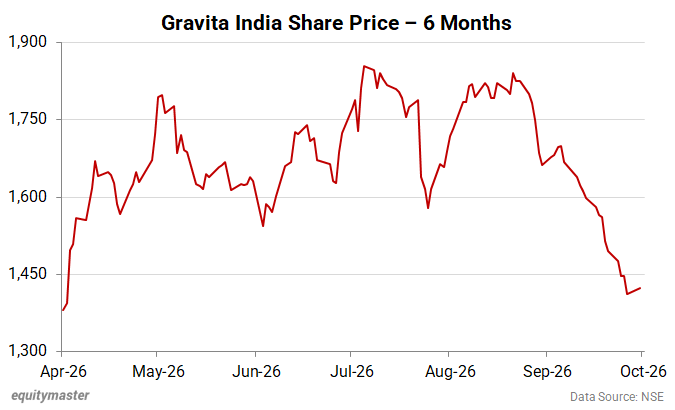
Revenue grew 42% YoY in Q1FY27. Operating margin stood at 7%, compared with 10% a year earlier.
The quarter was affected by supply-chain disruptions that restricted scrap availability, although higher realisations and a greater contribution from value-added products protected profitability.
The copper business is becoming an important part of the story. Gravita is setting up a 29,400 MTPA copper recycling facility in Gujarat at an estimated cost of Rs 1.6 bn, with commissioning expected within the next 12 months.
The company has also acquired a 99.44% stake in Rashtriya Metal Industries, which operates a 31,200 MTPA copper and copper-alloy manufacturing facility, giving Gravita a presence further up the value chain.
The expansion, however, does not automatically mean higher earnings. Overall capacity utilisation was around 52% in Q1FY27, while management said sustainable utilization could reach around 70% as scrap availability improves.
The company is also expanding its procurement network in developed markets to reduce dependence on disrupted supply routes.
At 28.2 times earnings, the stock is trading at around a 6.9% discount to its 5-year PE of 30.3.
To know more about the company, check out its financial factsheet and latest quarterly results.
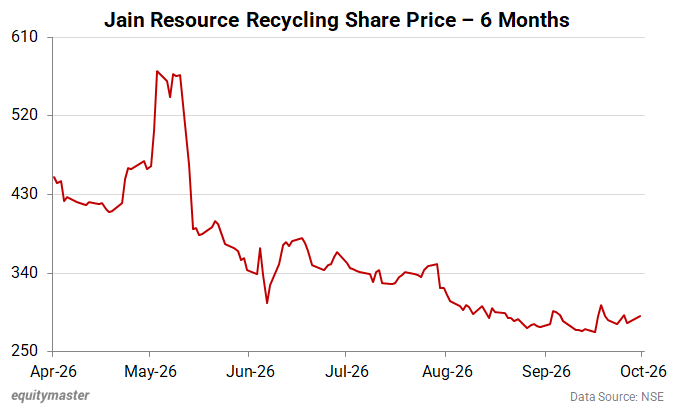
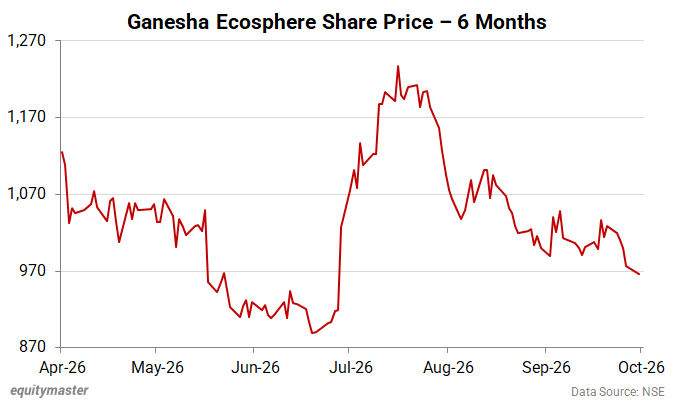
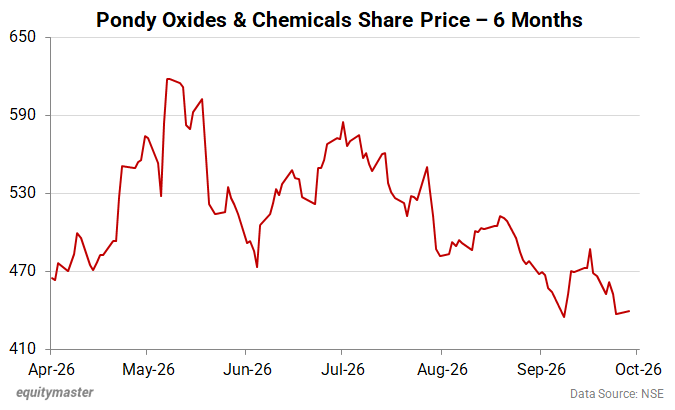
Want To Read The Full Article?
Enter your email to continue reading on Equitymaster.
Important: We hate spam as much as you do. Check out our Privacy Policy and Terms Of Use.
By submitting your email address, you also sign up for Profit Hunter, a daily newsletter from Equitymaster covering exciting investing ideas and opportunities in India.
ABOUT EQUITYMASTER
Since 1996, Equitymaster has been the source for honest and credible opinions on investing in India. With solid research and in-depth analysis Equitymaster is dedicated towards making its readers- smarter, more confident and richer every day. Here's why hundreds of thousands of readers spread across more than 70 countries Trust Equitymaster.
PREMIUM PRODUCTS
- Hidden Treasure
- Forever Stocks
- Big Wave Profits
- Equitymaster Venture
- Microcap Millionaires
- Momentum Profits
- Double Income
- Midcap Value Alert
- Exponential Profits
- Annual Breakout Alert
- Lazy Millionaire
- Phase One Alert
- Smallcap AlphaQuest
- InsiderPro Stocks
- StockSelect
- Private Briefing
- Active Wealth Multiplier 2030
- FundSelect
- Fund Advantage
QUICK LINKS
POPULAR TOPICS
- Multibagger Penny Stocks
- Basics of Value Investing
- Benjamin Graham
- How to Invest in Gold
- How to Invest in Silver
- Best Stocks to Buy Today
- Best Small-cap Stocks to Buy
- Best Bluechip Stocks to Buy
- Guide to Penny Stocks
- How to Invest in the Share Market
- Warren Buffett - The Value Investor
- Pick the Best Multibagger Stocks
TRENDING TOPICS
- Best Defence Stocks in India
- Upcoming Dividend Stocks
- Best Semiconductor Stocks in India
- Data Center Stocks in India
- Best Railway Stocks in India
- Best Solar Stocks in India
- Fastest Growing Stocks in India
- List of BSE Sensex 30 Stocks
- Adani Group Shares
- Stocks Recently Bought by FIIs in India
- Top Value Stocks in India


LEGAL DISCLAIMER:
Investment in securities market are subject to market risks. Read all the related documents carefully before investing.
Registration granted by SEBI, enlistment with BSE as IA and RA, and certification from NISM in no way guarantee performance of the intermediary or provide any assurance of returns to investors.
All rights reserved. Any act of copying, reproducing or distributing any content from this website whether wholly or in part, for any purpose without the permission of Quantum Information Services Private Limited is strictly prohibited and shall be deemed to be copyright infringement.
Quantum Information Services Private Limited (QIS) is a SEBI registered Research Analyst (bearing registration no INH000021128) and Investment Adviser(Reg. No: INA000000680). Consequent upon the merger of Equitymaster Research Private Limited into QIS, effective October 30, 2025 QIS owns and operates brand 'Equitymaster' and website www.equitymaster.com. This does not constitute or is not intended to constitute an offer to buy or sell, or a solicitation to an offer to buy or sell financial products, units or securities and QIS including its employees, personnel, directors, associates will not be liable for any losses (direct or indirect) incurred or investment(s) made or decisions taken/or not taken based on the information provided herein. All content and information is provided on an 'As Is' basis by QIS. Information herein is believed to be reliable but QIS does not warrant its completeness or accuracy and expressly disclaims all warranties and conditions of any kind, whether express or implied. The services rendered by QIS are on a best effort basis. QIS does not assure or guarantee the user any minimum or fixed returns. The securities quoted, if any are for illustration only and are not recommendatory. Use of this information is at the user's own risk. The user must make his own investment decisions based on his specific investment objective and financial position and using such independent advisors as he believes necessary. This is not directed for access or use by anyone in a country, especially, USA, Canada or the European Union countries, where such use or access is unlawful or which may subject QIS or its affiliates to any registration or licensing requirement.
The performance data quoted represents past performance and does not guarantee future results. As a condition to accessing QIS's content and website, you agree to our Terms and Conditions of Use, available here
Equitymaster requests your view! Post a comment on "5 Recycling Stocks With Expansion Plans". Click here!
Comments are moderated by Equitymaster, in accordance with the Terms of Use, and may not appear
on this article until they have been reviewed and deemed appropriate for posting.
In the meantime, you may want to share this article with your friends!