

Warren Buffett Bought a Semiconductor Stock. Should You?
Thousands of small farmers in southern Taiwan have become super rich over past few years.
Reason?
Their agricultural lands were bought by Taiwan Semiconductor Manufacturing Company (TSMC), the largest contract chipmaker in the world.
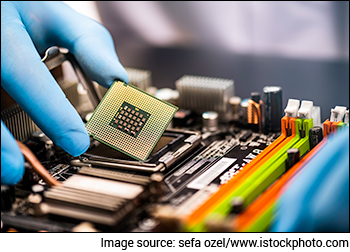
TSMC has built a plant to make 3 nanometre chips. These will go into semiconductors expected to be up to 70% faster and more power-efficient than the most advanced in production now. Plus, these will be used in devices from smartphones to supercomputers.
The plant, due to start mass production in late 2022, will use process technology which so far only TSMC and South Korea's Samsung Electronics have mastered. At present, the most advanced chips are 5 nano metres (nm).
The new chips bring huge advantages for customers. The smaller the transistors on a chip, the lower the energy consumption and higher the speed.
--- Advertisement ---
Investment in securities market are subject to market risks. Read all the related documents carefully before investing
Looking to Buy Midcap Stocks?
If you're looking to buy some high-quality midcap stocks, then our co-head of research Rahul Shah has got some great recommendations.
You can get instant access to these stocks by subscribing to his popular stock research service, Midcap Value Alert.
The great news is... as part of Equitymaster's 28th anniversary celebrations... you have the chance to access this service at a huge 80% OFF
Get Full Details
Details of our SEBI Research Analyst registration are mentioned on our website - www.equitymaster.com
---------------------------------------------------
The computer chips made by the TSMC aren't just the brains inside smartphones, laptops, and video game consoles. They're also core components of almost every kind of electronics in the world. From data centres to fighter jets, every kind of hi-tech electronics need them.
Apple, Huawei, Sony, Qualcomm, Broadcom, and several Indian companies, are among TSMC's 500 odd clients.
Now, what makes TSMC relevant to you dear reader?
Well, it's the unique business model and the ability to develop the semiconductor ecosystem from scratch. Both are necessary for Indian semiconductor producers to gain traction in being the global semiconductor hub.
Morris Chang, who founded TSMC in 1987, had spent 25 years at Texas Instruments developing its semiconductor business. When he was selected to lead the Taiwan government-backed technology development project, its semiconductor industry was nascent. It also had stiff competition.
Chang realised that companies like Huawei and Apple, design but don't actually manufacture their own chips. Integrated device manufacturers, such as Intel, Fujitsu, and Samsung, which make the chips start to finish, use the chips in their own products.
So, the world basically needed large scale chip foundries.
TSMC paved the way for a future where companies could design their chips and contract their production out. This helped in saving the enormous investment of time and capital required to keep up their own fabrication units.
TSMC's achievement is in changing the global semiconductor division of labour.
--- Advertisement ---
Investment in securities market are subject to market risks. Read all the related documents carefully before investing
Equitymaster's Premium Research:
Discover the Lucrative Opportunities in India's Emerging Business space
Read This Letter
Details of our SEBI Research Analyst registration are mentioned on our website - www.equitymaster.com
---------------------------------------------
Before Morris Chang, putting up a chip foundry was considered an impossible task. Customers were afraid of leaking or plagiarising chip designs. Hence, they were reluctant to hand over chips to foundries for manufacturing.
However, TSMC persuaded a huge number of companies with its high-standard integrity management.
TSMC slowly became the largest semiconductor fabrication company in the world.
The rest, as they say, is history.
But TSMC created history, once again, by being among the handful technology companies that Warren Buffett has bought till date.
Buffett's regret about not investing in Google and Amazon in their early days is well known.
But he did not shy away from taking modest position of a billion dollars in smartphone maker Apple during 2016. With his consistent buying, by the year end 2020, Berkshire owned more than 5% of the company, a value worth US$120 bn.
--- Advertisement ---
Investment in securities market are subject to market risks. Read all the related documents carefully before investing
Want Low Risk Stocks with High Growth Potential?
Access Our Premium Research on Safe Stocks at 60% Off
Full Details Here
Details of our SEBI Research Analyst registration are mentioned on our website - www.equitymaster.com
---------------------------------------------------
Over the years, Apple has been instrumental in Berkshire's book value performance. In fact it provided more than 50% of Berkshire's total unrealised gains in 2021.
Therefore, Buffett's recent US$4.1 bn bet on the American Depositary Receipts (ADR) of TSMC, does not come as a surprise. The legendary 'forever' investor sees semiconductor foundries being critical to the world for decades to come.
Now, quite a few companies in India are planning meaningful semiconductor capacities in the coming decade. Many of them are in collaboration with the Taiwanese chip makers.
In other words, India's semiconductor ecosystem is where Taiwan's was three decades back.
No doubt the companies have the risk of execution. But an early investor could fetch great bargains.
I have already laid out the blueprint for the semiconductor war profits.
More to come. Stay tuned...
Warm regards,
Tanushree Banerjee
Editor, StockSelect
Equitymaster Agora Research Private Limited (Research Analyst)
Recent Articles
- Wait for Tata Electronics IPO to Buy Semiconductor Stocks? April 18, 2024
- India's chip designers are already leading the pack in India's semiconductor ecosystem.
- Are Green Hydrogen Stocks on Your Watchlist? April 17, 2024
- The quest to hit net zero has generated huge interest in green hydrogen.
- One of the Most Important Themes Playing out in the Indian Stock Market April 16, 2024
- Are you profiting from premiumisation?
- Stocks to Profit from India's Transformer Gold Rush April 15, 2024
- The transformer is the new gold. These two pick and shovel stocks can be a part of your watchlist.
ABOUT EQUITYMASTER
Since 1996, Equitymaster has been the source for honest and credible opinions on investing in India. With solid research and in-depth analysis Equitymaster is dedicated towards making its readers- smarter, more confident and richer every day. Here's why hundreds of thousands of readers spread across more than 70 countries Trust Equitymaster.
PREMIUM PRODUCTS
QUICK LINKS
POPULAR TOPICS
- Multibagger Penny Stocks
- Basics of Value Investing
- Benjamin Graham
- How to Invest in Gold
- How to Invest in Silver
- Best Stocks to Buy Today
- Best Small-cap Stocks to Buy
- Best Bluechip Stocks to Buy
- Guide to Penny Stocks
- How to Invest in the Share Market
- Warren Buffett - The Value Investor
- Pick the Best Multibagger Stocks
TRENDING TOPICS


Copyright © Equitymaster Agora Research Private Limited.
Whitelist | Refer | Terms | Privacy | Contact | About | Sitemap

Equitymaster Agora Research Private Limited (Research Analyst)
SEBI (Research Analysts) Regulations 2014, Registration No. INH000000537.
103, Regent Chambers, Above Status Restaurant, Nariman Point, Mumbai - 400 021. India.
Telephone: +91-22-61434055. Email: info@equitymaster.com. Website: www.equitymaster.com.
CIN:U74999MH2007PTC175407
Name of the Compliance & Grievance Officer: Ms Sonal Ramachandran
Telephone: +91-22-61434003 | Email: compliance@equitymaster.com
LEGAL DISCLAIMER:
Investment in securities market are subject to market risks. Read all the related documents carefully before investing.
Registration granted by SEBI and certification from NISM in no way guarantee performance of the intermediary or provide any assurance of returns to investors.
All rights reserved. Any act of copying, reproducing or distributing this newsletter whether wholly or in part, for any purpose without the permission of Equitymaster is strictly prohibited and shall be deemed to be copyright infringement.
Equitymaster Agora Research Private Limited (Research Analyst) bearing Registration No. INH000000537 (hereinafter referred as 'Equitymaster') is an independent equity research Company. Equitymaster is not an Investment Adviser. Information herein should be regarded as a resource only and should be used at one's own risk. This is not an offer to sell or solicitation to buy any securities and Equitymaster will not be liable for any losses incurred or investment(s) made or decisions taken/or not taken based on the information provided herein. Information contained herein does not constitute investment advice or a personal recommendation or take into account the particular investment objectives, financial situations, or needs of individual subscribers. Before acting on any recommendation, subscribers should consider whether it is suitable for their particular circumstances and, if necessary, seek an independent professional advice. This is not directed for access or use by anyone in a country, especially, USA, Canada or the European Union countries, where such use or access is unlawful or which may subject Equitymaster or its affiliates to any registration or licensing requirement. All content and information is provided on an 'As Is' basis by Equitymaster. Information herein is believed to be reliable but Equitymaster does not warrant its completeness or accuracy and expressly disclaims all warranties and conditions of any kind, whether express or implied. Equitymaster may hold shares in the company/ies discussed herein. As a condition to accessing Equitymaster content and website, you agree to our Terms and Conditions of Use, available here. The performance data quoted represents past performance and does not guarantee future results.
Equitymaster requests your view! Post a comment on "Warren Buffett Bought a Semiconductor Stock. Should You?". Click here!
Comments are moderated by Equitymaster, in accordance with the Terms of Use, and may not appear
on this article until they have been reviewed and deemed appropriate for posting.
In the meantime, you may want to share this article with your friends!