


MEMBER'S LOGINX
| Invalid Username / Password | ||||||||
| Invalid Captcha | ||||||||
|
||||||||
| Sign Up | Forgot Password? | ||||||||
- Home
- Outlook Arena
- What is Index Fund?
What is Index Fund?
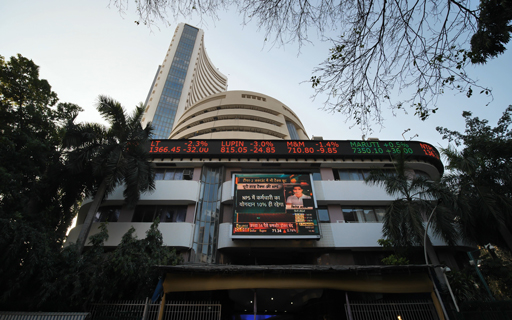
An index fund, as the name implies, invests in stocks that resemble stock market indexes such as the NSE Nifty, BSE Sensex etc.
In this case, the fund manager invests in the same securities as those highlighted in the index, in the same proportions, without changing the portfolio composition.
These index funds are passively managed which means, it tries to manage returns offered by the index.
Index funds are different from actively managed funds. In actively managed fund, the fund manager changes the composition of portfolio according to the assessment of underlying stocks. This adds an element of risk.
Hence, passively managed funds are less volatile than the actively managed funds.
When there’s a market rally, index funds often provide good results. However, it is often recommended to switch on actively managed funds in a market crash.
As index funds are passively managed, they replicate the behavior of that particular index. There is no requirement of any research and analysis hence the expense ratio is very less.
This becomes the unique selling point of an index fund.
These funds are usually for longer tenure about 7 years or more. It is observed that in short term, index funds show fluctuations while in the long run, it averages out.
Before investing, one should be aware of the taxation applied on the funds.
Legendary investor Warren Buffett has frequently touted the benefits of investing in low-cost index funds.
In fact, he's instructed the trustee of his estate to invest in index funds.
![]() How to Beat Nifty Stocks
How to Beat Nifty Stocks
Nov 27, 2023
The best way to receive your fair share of wealth created by the stock market.
![]() Top 4 Investment Themes for 2022
Top 4 Investment Themes for 2022

Nov 9, 2021
As the economy rebounds, here are four investment themes you should keep in mind while investing in 2022.
This is the Best Way to Make a Fortune in the Stock Market
Sep 12, 2019
The simple secret to making millions in the stock market.
![]() Top 5 Index Funds with the Lowest Expense Ratios
Top 5 Index Funds with the Lowest Expense Ratios

Jul 5, 2022
Here's how you can diversify your portfolio at a fraction of the cost.
Can Investing Become the Hottest Job of this Decade & Beyond?
Jul 19, 2021
Is investing about to become the most common job of the 2000s?
ABOUT EQUITYMASTER
Since 1996, Equitymaster has been the source for honest and credible opinions on investing in India. With solid research and in-depth analysis Equitymaster is dedicated towards making its readers- smarter, more confident and richer every day. Here's why hundreds of thousands of readers spread across more than 70 countries Trust Equitymaster.
PREMIUM PRODUCTS
QUICK LINKS
POPULAR TOPICS
- Multibagger Penny Stocks
- Basics of Value Investing
- Benjamin Graham
- How to Invest in Gold
- How to Invest in Silver
- Best Stocks to Buy Today
- Best Small-cap Stocks to Buy
- Best Bluechip Stocks to Buy
- Guide to Penny Stocks
- How to Invest in the Share Market
- Warren Buffett - The Value Investor
- Pick the Best Multibagger Stocks
TRENDING TOPICS


Copyright © Equitymaster Agora Research Private Limited.
Whitelist | Refer | Terms | Privacy | Contact | About | Sitemap

Equitymaster Agora Research Private Limited (Research Analyst)
SEBI (Research Analysts) Regulations 2014, Registration No. INH000000537.
103, Regent Chambers, Above Status Restaurant, Nariman Point, Mumbai - 400 021. India.
Telephone: +91-22-61434055. Email: info@equitymaster.com. Website: www.equitymaster.com.
CIN:U74999MH2007PTC175407
Name of the Compliance & Grievance Officer: Ms Sonal Ramachandran
Telephone: +91-22-61434003 | Email: compliance@equitymaster.com
LEGAL DISCLAIMER:
Investment in securities market are subject to market risks. Read all the related documents carefully before investing.
Registration granted by SEBI and certification from NISM in no way guarantee performance of the intermediary or provide any assurance of returns to investors.
All rights reserved. Any act of copying, reproducing or distributing this newsletter whether wholly or in part, for any purpose without the permission of Equitymaster is strictly prohibited and shall be deemed to be copyright infringement.
Equitymaster Agora Research Private Limited (Research Analyst) bearing Registration No. INH000000537 (hereinafter referred as 'Equitymaster') is an independent equity research Company. Equitymaster is not an Investment Adviser. Information herein should be regarded as a resource only and should be used at one's own risk. This is not an offer to sell or solicitation to buy any securities and Equitymaster will not be liable for any losses incurred or investment(s) made or decisions taken/or not taken based on the information provided herein. Information contained herein does not constitute investment advice or a personal recommendation or take into account the particular investment objectives, financial situations, or needs of individual subscribers. Before acting on any recommendation, subscribers should consider whether it is suitable for their particular circumstances and, if necessary, seek an independent professional advice. This is not directed for access or use by anyone in a country, especially, USA, Canada or the European Union countries, where such use or access is unlawful or which may subject Equitymaster or its affiliates to any registration or licensing requirement. All content and information is provided on an 'As Is' basis by Equitymaster. Information herein is believed to be reliable but Equitymaster does not warrant its completeness or accuracy and expressly disclaims all warranties and conditions of any kind, whether express or implied. Equitymaster may hold shares in the company/ies discussed herein. As a condition to accessing Equitymaster content and website, you agree to our Terms and Conditions of Use, available here. The performance data quoted represents past performance and does not guarantee future results.