

MEMBER'S LOGINX
| Invalid Username / Password | ||||||||
| Invalid Captcha | ||||||||
|
||||||||
| Sign Up | Forgot Password? | ||||||||
Investment in securities market are subject to market risks. Read all the related documents carefully before investing
We're Going On-Air Today:

- Home
- Profit Hunter
- Dec 25, 2025 - The Future of Renewable Energy Profits
The Future of Renewable Energy Profits
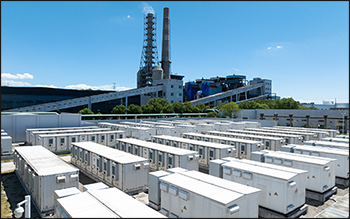 Image source: zhudifeng/www.istockphoto.com
The sun, once a niche energy source, has become the undisputed heavyweight champion of the clean energy transition.
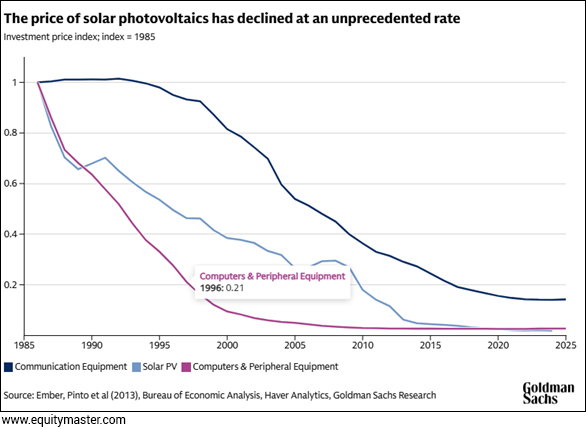
Its victory was driven by a relentless collapse in prices of solar modules. Solar module costs have dropped by over 90% since the 2010s.
This has made solar photovoltaic cell the cheapest form of new electricity generation in many global markets.
Meanwhile, India's ambitious green energy targets, and high annual solar panel deployment are shattering records.
This has ensured solar energy's presence is permanent and foundational to the global electric grid.
Currently solar energy contributes 47% of India's renewable capacity.
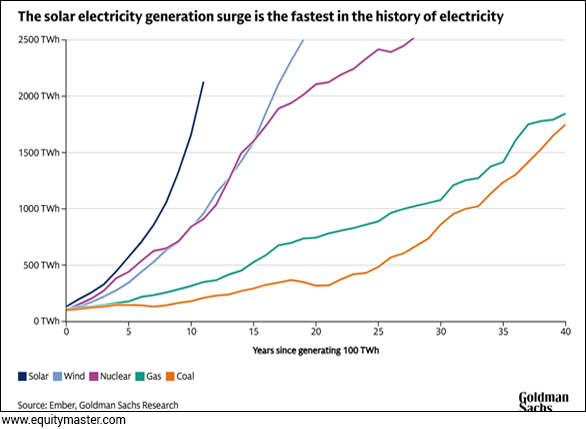
So, solar power is undeniably here to stay.
Yet, for investors, the growth of solar power masks a sharp paradox. The simple equation of 'install more panels - collect more revenue' no longer holds true.
The very success of solar power has brought about significant overcapacity in solar panel manufacturing. The supply glut is particularly in Asia and specifically expected in India over next 5 years.
It has driven module prices to record lows, decimating profit margins for traditional project developers.
The easy money from straightforward capacity building has vanished, replaced by a cutthroat race to the bottom.
Furthermore, regulatory frameworks, particularly around power pricing are shifting. This has created policy uncertainty that introduces serious risk for long-term project viability.
The future of solar power investment is, therefore, less about the panel. It's more about the ecosystem, energy storage, and policy navigation.
While the growth in solar energy demand is guaranteed, a profitable path forward demands strategic capital and innovation over volume.
The changing priorities towards climate friendly energy sources is another major risk to investors.
Policymakers in some of the world's largest economies are reducing support for solar power generation. While the US and China have reduced support for the sector, solar energy is likely to continue catering a high share of global energy demand in the long run.
So, there are three structural factors that investors looking for long term gains from solar energy sector need to keep in mind.
First, the cost of solar panels drops fast as the industry makes more of them. Therefore, players that are dependent on pricing of solar panels may not be long term value creators.
Second, solar energy's marginal fuel costs are zero, meaning that it costs nothing to produce every additional unit of electricity beyond the original cost of installing the panels and the ongoing cost of maintaining them.
So, there will be plenty of private players that will compete with institutional players in setting up solar energy capacities.
Third, solar panels are modular: They come in small sizes available at constant fixed prices, making it easier to create a decentralised grid.
However, the growth in retail demand for solar panels will remain dependant on the continuation of government incentives.
Any slowing in solar growth is likely to come from reduced policy support and from power supply volatility rather than from solar panel supply bottlenecks.
Since solar power generation is intermittent, the storage of power generated becomes paramount.
And here comes the need for Battery Energy Storage Systems (BESS).
Now, the BESS is not just a battery, it's a mechanism to store excess electricity produced by solar farms to allow that power to be discharged, when and where it is needed. This system helps ensure a reliable and consistent supply of electricity at all times and during peak demand or low generation times.
BESS provides reliable backup power, preventing costly disruptions to automated production lines and critical industrial processes during grid outages. Companies can store cheaper off-peak power and use it during expensive peak hours, significantly reducing operational costs for energy-intensive automated facilities.
BESS are therefore, better than traditional energy for grid stability, renewable integration, cost savings in storage of intermittent power and deploying it during peak demand, reducing emissions, offering instant grid response., etc
In other words, the BESS entities are a better proxy play on India's solar energy megatrend than the solar panel producers. And some credible entities in India's power generation and storage sectors are making the pivot.
Tata Power is actively expanding its BESS capabilities to support renewable integration, grid stability, and round-the-clock power supply across India.
Tata Power Renewable Energy, a subsidiary of Tata Power, has signed its first Battery Energy Storage Purchase Agreement (BESPA) with NHPC.
It's part of NHPC's broader initiative to develop 125 MW / 500 MWh of standalone battery storage capacity in the state of Kerala, under a tariff-based competitive bidding framework supported by viability gap funding.
Amara Raja Energy was earlier a leading manufacturer of lead-acid batteries for automotive and industrial applications.
It has made a strategic pivot toward lithium-ion batteries and energy storage solutions. The company intends to leverage its expertise in both renewable EPC and batteries for home and stationary applications, ideally positioning to cater to all major segments of energy storage - home, commercial, industrial, and utility.
There are also some lesser-known entities like Jupiter Wagons venturing into the BESS space. Recently, it entered electric mobility and has already received orders for full-fledged battery energy storage systems.
Jupiter Wagons' future plans focus on expanding its railway manufacturing capacity, making a strategic foray into the electric vehicle (EV) segment, and strengthening its export business.
The company aims to nearly double its revenue by FY28 by diversifying its product portfolio and tapping into India's accelerating infrastructure growth.
You can find more Battery Energy Storage stocks on Equitymaster's Stock Screener.
Happy investing.
Warm regards,
Tanushree Banerjee
Editor, StockSelect
Quantum Information Services Private Limited (Research Analyst)

Tanushree Banerjee (Research Analyst), is the editor of Stock Select and Forever Stocks. Tanushree started her career at Equitymaster covering the banking and financial sector stocks and scrutinising RBI policies. Over the last decade, she developed Equitymaster's research processes that helped us pick out various multibaggers, across all sectors. A firm believer of "safety first" when it comes to investing, Tanushree closely follows the investing philosophies of Warren Buffett, Jeremy Grantham, and Joel Greenblatt.
ABOUT EQUITYMASTER
Since 1996, Equitymaster has been the source for honest and credible opinions on investing in India. With solid research and in-depth analysis Equitymaster is dedicated towards making its readers- smarter, more confident and richer every day. Here's why hundreds of thousands of readers spread across more than 70 countries Trust Equitymaster.
PREMIUM PRODUCTS
- Hidden Treasure
- Forever Stocks
- Big Wave Profits
- Equitymaster Venture
- Microcap Millionaires
- Momentum Profits
- Double Income
- Midcap Value Alert
- Exponential Profits
- Annual Breakout Alert
- Lazy Millionaire
- Phase One Alert
- InsiderPro Stocks
- StockSelect
- Private Briefing
- Active Wealth Multiplier 2030
- FundSelect
QUICK LINKS
POPULAR TOPICS
- Multibagger Penny Stocks
- Basics of Value Investing
- Benjamin Graham
- How to Invest in Gold
- How to Invest in Silver
- Best Stocks to Buy Today
- Best Small-cap Stocks to Buy
- Best Bluechip Stocks to Buy
- Guide to Penny Stocks
- How to Invest in the Share Market
- Warren Buffett - The Value Investor
- Pick the Best Multibagger Stocks
TRENDING TOPICS
- Best Defence Stocks in India
- Upcoming Dividend Stocks
- Best Semiconductor Stocks in India
- Data Center Stocks in India
- Best Railway Stocks in India
- Best Solar Stocks in India
- Fastest Growing Stocks in India
- List of BSE Sensex 30 Stocks
- Adani Group Shares
- Stocks Recently Bought by FIIs in India
- Top Value Stocks in India


LEGAL DISCLAIMER:
Investment in securities market are subject to market risks. Read all the related documents carefully before investing.
Registration granted by SEBI, enlistment with BSE as IA and RA, and certification from NISM in no way guarantee performance of the intermediary or provide any assurance of returns to investors.
All rights reserved. Any act of copying, reproducing or distributing any content from this website whether wholly or in part, for any purpose without the permission of Quantum Information Services Private Limited is strictly prohibited and shall be deemed to be copyright infringement.
Quantum Information Services Private Limited (QIS) is a SEBI registered Research Analyst (bearing registration no INH000021128) and Investment Adviser(Reg. No: INA000000680). Consequent upon the merger of Equitymaster Research Private Limited into QIS, effective October 30, 2025 QIS owns and operates brand 'Equitymaster' and website www.equitymaster.com. This does not constitute or is not intended to constitute an offer to buy or sell, or a solicitation to an offer to buy or sell financial products, units or securities and QIS including its employees, personnel, directors, associates will not be liable for any losses (direct or indirect) incurred or investment(s) made or decisions taken/or not taken based on the information provided herein. All content and information is provided on an 'As Is' basis by QIS. Information herein is believed to be reliable but QIS does not warrant its completeness or accuracy and expressly disclaims all warranties and conditions of any kind, whether express or implied. The services rendered by QIS are on a best effort basis. QIS does not assure or guarantee the user any minimum or fixed returns. The securities quoted, if any are for illustration only and are not recommendatory. Use of this information is at the user's own risk. The user must make his own investment decisions based on his specific investment objective and financial position and using such independent advisors as he believes necessary. This is not directed for access or use by anyone in a country, especially, USA, Canada or the European Union countries, where such use or access is unlawful or which may subject QIS or its affiliates to any registration or licensing requirement.
The performance data quoted represents past performance and does not guarantee future results. As a condition to accessing QIS's content and website, you agree to our Terms and Conditions of Use, available here
Equitymaster requests your view! Post a comment on "The Future of Renewable Energy Profits". Click here!
Comments are moderated by Equitymaster, in accordance with the Terms of Use, and may not appear
on this article until they have been reviewed and deemed appropriate for posting.
In the meantime, you may want to share this article with your friends!