

MEMBER'S LOGINX
| Invalid Username / Password | ||||||||
| Invalid Captcha | ||||||||
|
||||||||
| Sign Up | Forgot Password? | ||||||||
Investment in securities market are subject to market risks. Read all the related documents carefully before investing
We're Going On-Air Today:

- Home
- Outlook Arena
- Best Power Stocks in India
Best Power Stocks in India

Power is one of the most critical components of infrastructure, crucial for the economic growth and welfare of nations.
India is the world's third-largest producer as well as the third-largest consumer of power (electricity).
The country's power sector has made significant inroads over the last decade, doubling its installed capacity from 200 gigawatts (GW) in the financial year 2012 to 403 GW in the financial year 2022.
This comes on the back of strong reforms from the Ministry of Power. They have turned the country from one with a power shortage to one with a surplus by establishing a single national grid, fortifying the distribution network, and achieving universal household electrification.
Despite the significant increase in the power generation capacity, India still faces challenges in meeting the growing demand for power as reliable supply remains low in the country.
Electricity demand is on the rise. This is attributable to the growing population, rising levels of electrification in villages and smaller towns and a robust per-capita usage. The per capita consumption is less than a third of the global average highlighting the opportunity for growth. The demand for power in India is expected to grow threefold between 2018 and 2040.
India's power sector is one of the most diversified in the world. Sources of power generation range from conventional sources such as coal, lignite, natural gas, oil, hydro and nuclear power, to viable non-conventional sources such as wind, solar, agricultural and domestic waste.
However, we are still largely dependent on conventional sources such as coal. Coal-fired (including lignite) thermal power plants account for more than 50% of the total installed capacity.
Porter's Five Forces Analysis of the Power Sector in India
Porter's Five Forces is a model that identifies and analyzes five competitive forces that shape every industry.
These are barriers to entry, bargaining power of suppliers, bargaining power of customers, threat of substitutes and competition within the industry.
A change in any of the forces normally requires a company to re-assess the marketplace.
Let us have a look at how these five forces shape the power sector:
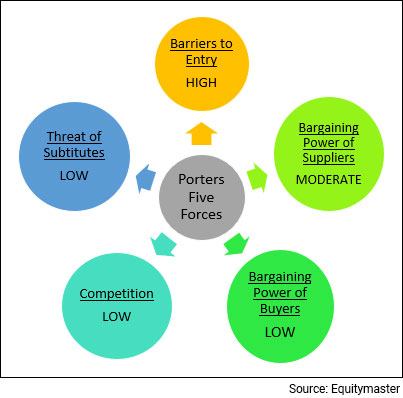
#1 Barriers to Entry
The most attractive segment is one in which barriers to entry are high as they restrict the threat of new entrants.
Conversely if the barriers are low, the risk of new companies venturing into a given market is high.
In the power sector, barriers to entry are high. Moreso in in the transmission and distribution segments, which are largely state monopolies. The primary reasons are high fixed costs, fuel linkages and payment guarantees from state governments that buy power and retail distribution license.
#2 Bargaining Power of Suppliers
The bargaining power of suppliers is the ability of suppliers to put the firm under pressure. Suppliers may refuse to work with the firm or charge excessively high prices for unique resources.
The bargaining power of suppliers in the power sector is moderate since the tariff structure is mainly regulated.
#3 Bargaining Power of Customers
The bargaining power of customers is the ability of customers to put the firm under pressure. It is high if buyers have many alternatives and low if they have few choices.
In the power sector, the bargaining power of customers is low. Despite low switching costs and the fact that electricity is an undifferentiated product, customers don't tend to change their source of electricity often.
#4 Competition
For most industries, understanding the competition is vital to successfully marketing or selling a product.
The competition in the power industry is low, as new entrants are dissuaded by a shortage of inputs such as natural gas and regulatory hurdles.
#5 Threat of Substitutes
A substitute product uses a different technology to try to solve the same economic need.
The threat of substitutes for the power sector is low as there is no alternative to power. Whereas within the sector, the threat of substitutes is moderate as the cost of switching to substitutes like solar, wind energy etc. is still high.
However, as the industry is still transforming and once the substitute sources become viable, the threat of substitutes can rise over the long term.
Porters Five Forces Analysis of the Power Sector in India
When to Invest in Power Stocks
The demand for power is closely linked to the economic growth which makes it a highly cyclical industry. This means that for some reason the economy and by extension the stock market flounders, so will power stocks.
Since economic cycles affect the earnings prospects, the best time to buy power stocks is at the start of an economic expansion. And the best time to sell is just before the economy begins to slow down.
So, if you invest in an power stock at the peak of an economic cycle there is good chance you will lose a huge chunk of the investment. Nevertheless, identifying the bottom of the cycle is not an easy task.
In the past decade, the power sector has provided investors healthy returns but overall, the performance of the sector has been underwhelming. However, with the advent of the renewable power in the country, this is likely to change.
Companies producing power with conventional sources have pivoted their businesses to focus on developing cleaner sources of energy. So, a good time to look at power stocks would be now, when companies are ramping up their clean energy sources.
The demand for power should continue to increase. With a rising urban population, the need for clean and infallible power supply gives immense scope for growth in the power sector.
Key Points to Keep in Mind While Investing in Power Stocks
Here are some key points to take note of before you invest in power stocks:
#1 Cyclicality of the sector
This is the most important factor one must keep in mind while investing in power stocks.
The power sector, being cyclical, is dependent on business cycles and economic conditions. As the demand for power is closely linked to the economy, power stocks are usually riskier - their fortunes are prone to economic booms and busts.
Usually, cyclical stocks can be used to generate high returns when the economy is doing well and vice versa.
#2 The shift towards cleaner sources of power (energy)
From EPC projects to energy generation and transmission, power companies are deep diving into every facet of the renewable segment. This renewed focus makes renewable power a noteworthy sector for the long-term.
As the world looks for alternative fuel sources, this sector has garnered a lot of attention of late.
Companies with coal-based power plants are also pivoting their businesses to focus on renewable energy sources. This monumental transition towards cleaner sources presents a huge money-making opportunity for investors.
#3 Competitive landscape
The monumental transition towards cleaner sources and strong growth prospects of the country has attracted several companies to invest in the renewables sector.
They are pivoting their business and operating in the market either through joint ventures with local partners or via independently owned operations.
This is bound to change the competitive landscape and is already churning of market shares amongst the top players.
While this is likely to continue for some time, the incumbent players should end up with a lion's share over the next decade.
#4 Profitability of the company
The sector has a low bargaining power and a fixed tariff structure set by the regulators. Therefore the sector operates on thin margins.
Here's a list of top power companies in India based on their consolidated net operating profit.
| Company | Net Sales (Rs m) | Operating Profit (Rs m) | Consolidated Net Profit (Rs m) |
|---|---|---|---|
| NTPC Ltd. | 11,48,575 | 3,91,867 | 1,61,114 |
| Power Grid Corporation Of India Ltd. | 3,99,281 | 3,73,295 | 1,70,938 |
| NHPC Ltd. | 83,538 | 44,683 | 35,377 |
| Torrent Power Ltd. | 1,37,157 | 36,297 | 4,097 |
| Sembcorp Energy India Ltd. | 76,891 | 22,130 | 1,424 |
| SJVN Ltd. | 24,220 | 19,527 | 9,775 |
| CESC Ltd. | 72,939 | 14,092 | 8,158 |
| Jaiprakash Power Ventures Ltd. | 46,246 | 13,479 | 1,085 |
| JSW Energy Ltd. | 36,427 | 12,728 | 5,698 |
Data as of March 2022
#5 Debt to equity (D/E) ratio
A company uses both equity and debt to run a business. However, the amount of debt it uses indicates its fixed obligations. Higher the leverage, higher will be the fixed charges such as interest expense which will lower the profitability.
Therefore, one must look for a debt-to-equity ratio of one or less than one.
Here's a list of top power companies in India with low debt to equity ratio.
| Company | Debt to Equity (x) |
|---|---|
| Inox Wind Energy Ltd. | 0.04 |
| JSW Energy Ltd. | 0.09 |
| PTC India Ltd. | 0.26 |
| Reliance Infrastructure Ltd. | 0.38 |
| SJVN Ltd. | 0.42 |
| Jaiprakash Power Ventures Ltd. | 0.47 |
| Reliance Power Ltd. | 0.69 |
| Adani Power Ltd. | 0.72 |
| Sembcorp Energy India Ltd. | 0.77 |
Data as of March 2022
#6 Return on Capital Employed (ROCE) ratio
Along with a low debt to equity ratio, a one must look for a high return on capital employed (ROCE).
Return on capital employed measures how much profits the company is generating through its capital. The higher the ratio, the better.
A ROCE of above 15% is considered decent for companies that are in an expansionary phase.
Power companies operate on a fixed tariff regime, which hampers their return ratios. Hence most of them operate on a ROCE of 14% or lower.
Here's a list of top power companies in India with ROCE of more than 10%.
| Company | ROCE (%) |
|---|---|
| Power Grid Corporation Of India Ltd. | 14.2 |
| PTC India Ltd. | 13.3 |
| Inox Wind Energy Ltd. | 10.3 |
Data as of March 2022
#7 Valuations
Two commonly used financial ratios used in the valuation of power stocks are -
Price to Earnings Ratio (P/E) - It compares the company's stock price with its earnings per share. The higher the P/E ratio, the more expensive the stock.
To find stocks with favorable P/E Ratios, check our list of stocks according to their P/E Ratios.
Price to Book Value Ratio (P/BV) - It compares a firm's market capitalization to its book value. A high P/BV indicates markets believe the company's assets to be undervalued and vice versa.
To find stocks with favorable P/BV Ratios, check our list of stocks according to their P/BV Ratios.
#8 Dividend yields
The power sector has a consistent trend of dividend yields. However, it varies depending on the owner's discretion.
Here's a list of top power companies in India that score well on dividend yield and dividend payout.
| Company | Dividend Yield (eoy) | Dividend Payout (%) |
|---|---|---|
| PTC India Ltd. | 9.6 | 75 |
| Power Grid Corporation Of India Ltd. | 6.8 | 147.5 |
| NHPC Ltd. | 6.5 | 18.1 |
| SJVN Ltd. | 6.2 | 17 |
| CESC Ltd. | 5.9 | 450 |
| NTPC Ltd. | 5.2 | 70 |
Data as of March 2022
For more details, check out the top stocks offering high dividend yields.
Top Power Stocks in India
The power sector is transforming. The top power stocks in India can immensely benefit with a variety of factors positively affecting the industry.
Here are the top power stocks in India which score well on crucial parameters.
| Company | RoE (Latest, %) | D/E (Curr FY, x) | Sales CAGR (3 yrs, %) | Profit CAGR (3 yrs, %) |
|---|---|---|---|---|
| NTPC Ltd. | 13.24 | 1.35 | 5.30% | 6.40% |
| Power Grid Corporation Of India Ltd. | 29.33 | 2.18 | 4.40% | 19.90% |
| PTC India Ltd. | 11.37 | 0.26 | -4.80% | 35.50% |
| Torrent Power Ltd. | 4.05 | 0.79 | 1.40% | -23.20% |
| Adani Green Energy Ltd. | -3.58 | 7.62 | 73.10% | NA |
| NHPC Ltd. | 14.09 | 1 | -2.40% | 7.70% |
| Sembcorp Energy India Ltd. | 1.29 | 0.77 | NA | NA |
| CESC Ltd. | 8.19 | 0.84 | -11.90% | -10.30% |
| Jaiprakash Power Ventures Ltd. | 1.58 | 0.47 | 5.90% | NA |
| JSW Energy Ltd. | 4.55 | 0.09 | -26.40% | -4.40% |
List of Power Stocks in India
The details of listed power companies can be found on the NSE and BSE website. However, the overload of financial information on these websites can be overwhelming.
For a more direct and concise view of this information, you can check out our list of power stocks.
Best Sources for Information on the Power Sector
Indian Brand Equity Foundation Powers and Mining Sector Report - https://www.ibef.org/industry/power
Ministry of Power - https://powermin.gov.in/
Ministry of New & Renewable Energy - https://mnre.gov.in/
So, there you go. Equitymaster's detailed guide on the top power stocks in India is simple and easy to understand. At the same time, it offers detailed analysis of both the sector and the top stocks in the sector.
You can also checkout our playlist on Power Stocks on Equitymaster's YouTube channel.
Here's a list of articles and videos on the power sector and top power stocks in India. This is a great starting point for anyone who is looking to explore more about power stocks and the power sector.
Disclaimer: This article is for information purposes only. It is not a stock recommendation and should not be treated as such. Learn more about our recommendation services here...
![]() 4 Smallcap Power Stocks Quietly Riding India's Electricity Surge
4 Smallcap Power Stocks Quietly Riding India's Electricity Surge

Mar 19, 2026
With rising power demand, here are four smallcap power stocks to watch closely now.
![]() Power Demand Rising as Gas Supply Tightens: 3 Electricity Stocks to Watch
Power Demand Rising as Gas Supply Tightens: 3 Electricity Stocks to Watch

Mar 12, 2026
Electricity demand is rising and these 3 stocks could benefit from the supply crunch plus growing demand for reliable power.
![]() Top 3 Uranium Stocks to Watch
Top 3 Uranium Stocks to Watch

Feb 20, 2026
Uranium has gained importance mainly because it's at the center of the global clean energy transition. Here are three stocks part of the uranium ecosystem.
![]() Why SJVN Share Price is Rising
Why SJVN Share Price is Rising

Jan 5, 2026
Project commissioning, the PSU rally, and clean energy expansion are driving up this stock. Read on...
![]() 4 Small-Cap Nuclear Power Stocks to Add to Your Watchlist
4 Small-Cap Nuclear Power Stocks to Add to Your Watchlist

Nov 29, 2025
India's nuclear expansion is speeding up. Discover four small-cap nuclear-linked stocks still under the radar.
![]() AI Needs a Lot of Power. Here Are 3 Ways to Cash in on the AI Power Boom
AI Needs a Lot of Power. Here Are 3 Ways to Cash in on the AI Power Boom

Sep 6, 2025
These 3 companies should be on your watchlist to ride the AI power boom.
![]() These Stocks Will Power Your Portfolio for the Next 10 Years
These Stocks Will Power Your Portfolio for the Next 10 Years

Jul 30, 2025
Why I believe power stocks will deliver electrifying gains over the next decade.
![]() Hidden Powerhouses: 5 Small Cap Power Stocks to Keep an Eye on in 2025
Hidden Powerhouses: 5 Small Cap Power Stocks to Keep an Eye on in 2025

Jun 28, 2025
These five small-cap power stocks are charged up for 2025. Will they shine bright or short circuit? Find out...
![]() 5 Nuclear Power Stocks to Add to Your Watchlist in 2025
5 Nuclear Power Stocks to Add to Your Watchlist in 2025

Jun 13, 2025
India is targeting a massive expansion to 100 GW by 2047. These 5 Nuclear Power Stocks are the key beneficiaries...
![]() Everyone Knows about NTPC, Power Grid and Tata Power. But Here are 5 Power Stocks Flying Under the Radar
Everyone Knows about NTPC, Power Grid and Tata Power. But Here are 5 Power Stocks Flying Under the Radar

May 21, 2025
India's power sector could produce some big multibaggers. Watch out for these stocks...
![]() 5 Best Power Stocks to Watch in 2026 and How to Invest in Them
5 Best Power Stocks to Watch in 2026 and How to Invest in Them

Mar 14, 2026
As demand for energy surges, let's take a look at 5 best power stocks in India.
![]() Top 3 Power Stocks to Watch as Data Center Demand Fuels Power Growth
Top 3 Power Stocks to Watch as Data Center Demand Fuels Power Growth
Feb 23, 2026
In 2026, the data center industry has shifted from a background infrastructure concern to the primary driver of global electricity growth. Here are 3 power stocks to watch amid rising demand.
![]() 5 Undervalued Renewable Energy Stocks to Watch as Union Budget 2026 Nears
5 Undervalued Renewable Energy Stocks to Watch as Union Budget 2026 Nears

Jan 8, 2026
With Union Budget 2026 just around the corner, here are 5 undervalued renewable energy stocks to watch.
![]() 3 Stocks to Watch as Lok Sabha Approves the SHANTI Nuclear Bill
3 Stocks to Watch as Lok Sabha Approves the SHANTI Nuclear Bill

Dec 18, 2025
With the SHANTI Nuclear Bill approved, here are three private players to watch as India opens up its nuclear ecosystem.
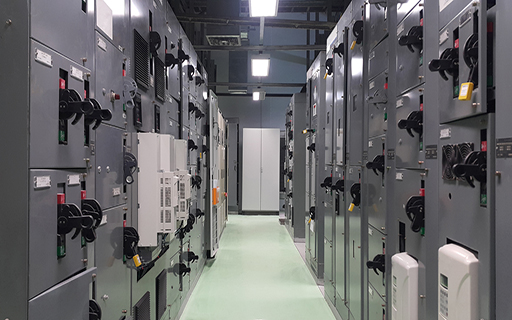
![]() 4 Top Smallcap Switchgear Stocks to Add to Your 2026 Watchlist
4 Top Smallcap Switchgear Stocks to Add to Your 2026 Watchlist
Nov 7, 2025
These smallcap switchgear makers combine sound financials, clean balance sheets and improving margins, making them strong additions to long-term portfolios.
![]() Nuclear Power's Gold Rush: 5 Stocks to Watch in 2026
Nuclear Power's Gold Rush: 5 Stocks to Watch in 2026

Aug 28, 2025
Explore five fundamentally strong, low-debt Indian stocks positioned to ride the country's nuclear energy expansion.
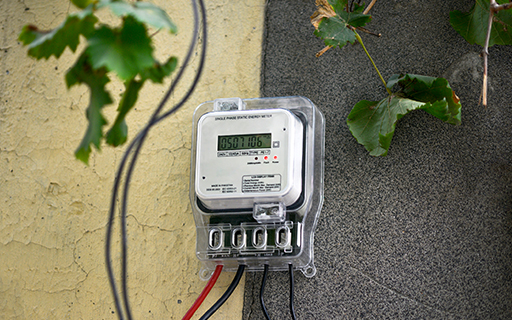
![]() Everyone Knows About Genus Power, HPL Electric & Schneider Electric. But Here are 5 Smart Meter Stocks Flying Under the Radar
Everyone Knows About Genus Power, HPL Electric & Schneider Electric. But Here are 5 Smart Meter Stocks Flying Under the Radar
Jul 21, 2025
Here are 5 lesser-known companies from the smart meter industry.
![]() 5 Undervalued Power Stocks
5 Undervalued Power Stocks

Jun 14, 2025
After a market correction in the power sector in the last one year, these undervalued power stocks are worth adding to your watchlist.
![]() Where Will Waaree Energies' Share Price be in 3 Years?
Where Will Waaree Energies' Share Price be in 3 Years?

Jun 3, 2025
To know if Waaree Energies derives a place on your watchlist, take a quick look into its business.
![]() This is Why I'm Bullish on Power Stocks
This is Why I'm Bullish on Power Stocks

May 14, 2025
You should power your portfolio with these stocks.
FAQs
Which are the Top Power Companies In India right now?
As per Equitymaster's Indian stock screener, here is the list of the top power stocks in India right now...
- #1 NTPC
- #2 ADANI POWER
- #3 POWER GRID
- #4 ADANI GREEN ENERGY
- #5 TATA POWER
These companies are investing in the renewable power segment and keeping themselves ahead of the competition.
Note that, there are various other parameters you should take into account before investing in any company such as promoter holding etc. Sustained research must not be compromised despite the positive odds.
Which are the power stocks with the best shareholder returns?
Power Grid and NTPC were the top performers over the last 5 years in terms of sales and profit growth.
Power Grid's growth was led by its leadership status in the company and support from the Government considering it is a PSU.
NTPC, also a PSU, is India's largest power-generation utility has the done well in the domestic power sector on account of its leadership status and well-established relations with the state distribution companies.
To know which other companies performed well over the last 5 years, check out our entire list of top performers.
What kind of dividend yields do power stocks offer?
The power sector has a consistent trend of dividend yields. However, it varies depending on the owner's discretion.
At present, Power Grid, JSW Energy, Tata Power and NTPC offer attractive dividend yields to their shareholders.
For more, check out the top dividend yield stocks on Equitymaster's Indian stock screener.
Which are the top gainers and top losers within the power sector today?
Within the Power sector, the top gainers were VEER ENERGY (up 7.0%) and MODERN MALLEABLES LTD. (up 5.0%). On the other hand, URJA GLOBAL LTD. - (RIGHTS ISSUE) (down 10.1%) and JAIPRAKASH POWER (down 9.5%) were among the top losers.
For more, please visit the BSE power index live chart and also check out our power sector report.
ABOUT EQUITYMASTER
Since 1996, Equitymaster has been the source for honest and credible opinions on investing in India. With solid research and in-depth analysis Equitymaster is dedicated towards making its readers- smarter, more confident and richer every day. Here's why hundreds of thousands of readers spread across more than 70 countries Trust Equitymaster.
PREMIUM PRODUCTS
- Hidden Treasure
- Forever Stocks
- Big Wave Profits
- Equitymaster Venture
- Microcap Millionaires
- Momentum Profits
- Double Income
- Midcap Value Alert
- Exponential Profits
- Annual Breakout Alert
- Lazy Millionaire
- Phase One Alert
- InsiderPro Stocks
- StockSelect
- Private Briefing
- Active Wealth Multiplier 2030
- FundSelect
QUICK LINKS
POPULAR TOPICS
- Multibagger Penny Stocks
- Basics of Value Investing
- Benjamin Graham
- How to Invest in Gold
- How to Invest in Silver
- Best Stocks to Buy Today
- Best Small-cap Stocks to Buy
- Best Bluechip Stocks to Buy
- Guide to Penny Stocks
- How to Invest in the Share Market
- Warren Buffett - The Value Investor
- Pick the Best Multibagger Stocks
TRENDING TOPICS
- Best Defence Stocks in India
- Upcoming Dividend Stocks
- Best Semiconductor Stocks in India
- Data Center Stocks in India
- Best Railway Stocks in India
- Best Solar Stocks in India
- Fastest Growing Stocks in India
- List of BSE Sensex 30 Stocks
- Adani Group Shares
- Stocks Recently Bought by FIIs in India
- Top Value Stocks in India


LEGAL DISCLAIMER:
Investment in securities market are subject to market risks. Read all the related documents carefully before investing.
Registration granted by SEBI, enlistment with BSE as IA and RA, and certification from NISM in no way guarantee performance of the intermediary or provide any assurance of returns to investors.
All rights reserved. Any act of copying, reproducing or distributing any content from this website whether wholly or in part, for any purpose without the permission of Quantum Information Services Private Limited is strictly prohibited and shall be deemed to be copyright infringement.
Quantum Information Services Private Limited (QIS) is a SEBI registered Research Analyst (bearing registration no INH000021128) and Investment Adviser(Reg. No: INA000000680). Consequent upon the merger of Equitymaster Research Private Limited into QIS, effective October 30, 2025 QIS owns and operates brand 'Equitymaster' and website www.equitymaster.com. This does not constitute or is not intended to constitute an offer to buy or sell, or a solicitation to an offer to buy or sell financial products, units or securities and QIS including its employees, personnel, directors, associates will not be liable for any losses (direct or indirect) incurred or investment(s) made or decisions taken/or not taken based on the information provided herein. All content and information is provided on an 'As Is' basis by QIS. Information herein is believed to be reliable but QIS does not warrant its completeness or accuracy and expressly disclaims all warranties and conditions of any kind, whether express or implied. The services rendered by QIS are on a best effort basis. QIS does not assure or guarantee the user any minimum or fixed returns. The securities quoted, if any are for illustration only and are not recommendatory. Use of this information is at the user's own risk. The user must make his own investment decisions based on his specific investment objective and financial position and using such independent advisors as he believes necessary. This is not directed for access or use by anyone in a country, especially, USA, Canada or the European Union countries, where such use or access is unlawful or which may subject QIS or its affiliates to any registration or licensing requirement.
The performance data quoted represents past performance and does not guarantee future results. As a condition to accessing QIS's content and website, you agree to our Terms and Conditions of Use, available here